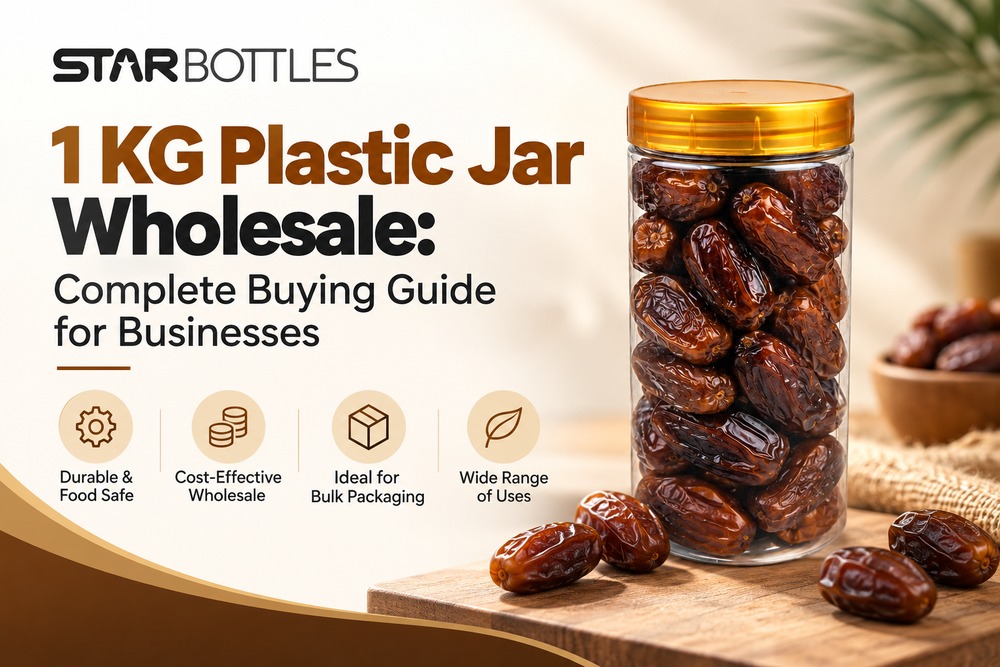
1 KG Plastic Jar Wholesale: Complete Buying Guide for Businesses
Introduction
A 1 KG plastic jar is one of the most popular packaging sizes for food and dry goods. It suits pickles, honey, spices, snacks, sweets, pulses, and many other products. For businesses that sell in volume, buying these jars wholesale helps control cost and keeps supply steady. But a low price alone is not enough. This guide explains what to check before you place a bulk order.
Why Choose a 1 KG Plastic Jar?
Lightweight: Plastic jars are far lighter than glass, which lowers freight cost and handling effort.
Shatter-resistant: They are less likely to break during transport and storage.
Clear display: Clear jars let customers see the product, which builds trust on the shelf.
Easy to label: Smooth surfaces take labels and branding well.
Practical size: 1 KG suits both retail packs and family or business use.
Common Materials
PET: Clear, lightweight, and popular for dry foods, snacks, pickles, and spices. It gives a glass-like look.
PP (polypropylene): Tougher and often chosen where heat resistance matters.
HDPE: Strong and durable, usually opaque or semi-opaque, and often used for powders and supplements.
The right choice depends on your product, filling method, and storage conditions. Always confirm the material suits your product before ordering.
Key Points to Check Before Buying
Capacity and fill weight: A “1 KG” jar may refer to the weight of the product it holds or to its volume. Dense products like honey fill differently from light snacks. Ask for the actual volume in ml and test with your product.
Shape and design: Round, square, and long (tall) jars each store and display differently. Square jars save shelf and carton space, while round jars are the most common.
Neck size and lid type: The neck size must match the lid. Wide-neck jars make filling and scooping easier. Check whether lids are included and whether you need screw caps, plain caps, or tamper-evident closures.
Jar weight and wall strength: Heavier jars are usually sturdier, while lighter jars cut cost and freight. Pick the balance that suits your product and transport route.
Clarity and finish: For retail display, look for clean, clear walls without scratches or cloudiness.
Food-safety needs: If the jar will hold food, ask the supplier for the relevant material and compliance details for your market. Don’t assume it. Request documents where needed.
What Affects Wholesale Pricing
Order quantity: Larger orders usually bring a lower price per jar.
Material and weight: More plastic per jar means a higher cost.
Lids and accessories: Check whether the price includes lids, liners, or seals.
Packing and freight: Bags, cartons, and distance all change the landed cost.
Customization: Printing, special colors, or custom molds add cost and need larger minimum orders.
How to Evaluate a Wholesale Supplier
Ask for samples and test them with your product before ordering in bulk.
Check the minimum order quantity (MOQ) and lead time.
Confirm that the jar and lid fit properly and seal as expected.
Ask whether supply stays consistent across repeat orders.
Review the packing method so jars arrive clean and undamaged.
Compare the total cost per jar, including lid and freight, not just the jar price.
Common Mistakes to Avoid
Ordering without testing a sample.
Choosing a jar without checking neck size and lid fit.
Buying on price alone and ignoring quality.
Forgetting storage space for bulk cartons.
Not confirming that the material suits your product.
Who Should Buy Wholesale?
Wholesale 1 KG plastic jars suit food brands, spice and pickle makers, sweet shops, dry fruit sellers, retailers, packers, distributors, and startups preparing a product launch.
Conclusion
Buying 1 KG plastic jars wholesale works best when you plan ahead. Decide on material, shape, neck size, and lid type first. Test a sample, compare total costs, and choose a supplier who can deliver consistent quality. With the right jar, your product stays protected, looks professional on the shelf, and reaches customers in good condition.
saran hari
.