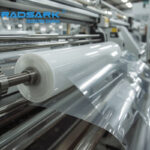
Quality Control in Stretch Film Manufacturing for Global Export Success.
In today’s competitive global market, packaging is no longer just about wrapping products — it is about protection, performance, and reliability. For industries involved in export, especially FMCG, pharmaceuticals, chemicals, and industrial goods, high-quality stretch film plays a crucial role in ensuring safe transit across borders.
One of the most important factors behind reliable packaging performance is quality control in manufacturing. From raw material inspection to advanced lab testing, strict quality measures ensure that stretch film meets international standards and global client expectations.
For manufacturers like Tilak Polypack Pvt. Ltd., maintaining consistent quality in stretch film production is essential to serving domestic and international markets efficiently.
This article explores how quality control processes — including GSM testing, elongation tests, tear resistance checks, and lab performance analysis — ensure global client satisfaction in the stretch film export industry.
Why Quality Control is Critical in Stretch Film Manufacturing
Stretch film is widely used for:
Pallet wrapping
Load stabilization
Export packaging
Warehouse storage
Industrial bundling
When goods are transported internationally, they undergo:
Long shipping durations
Multiple loading and unloading cycles
Environmental changes (humidity, temperature)
Rough handling
If the stretch film fails during transit, it can result in product damage, financial losses, and dissatisfied clients.
That is why systematic quality control in packaging manufacturing becomes essential.
1. Raw Material Inspection: The Foundation of Quality
Quality stretch film begins with high-grade raw materials such as Linear Low-Density Polyethylene (LLDPE).
Manufacturers focused on export-quality production carefully inspect:
Melt flow index (MFI)
Resin consistency
Additive compatibility
Moisture levels
Any inconsistency in raw materials directly affects stretchability, transparency, and strength of the final film.
For export-focused companies like Tilak Polypack, sourcing premium raw materials ensures consistency in every batch produced.
2. GSM Testing: Ensuring Thickness Accuracy
What is GSM in Stretch Film?
GSM (Grams per Square Meter) measures the weight of the film per unit area. It directly indicates film thickness and material usage.
Why GSM Testing is Important
Ensures uniform thickness across rolls
Prevents overuse or underuse of raw material
Maintains cost efficiency
Ensures compliance with client specifications
For export buyers, thickness consistency is critical. If a film is thinner than promised, it may tear easily. If it is thicker, it increases cost unnecessarily.
Advanced manufacturing units conduct regular GSM testing using calibrated lab equipment to maintain precise thickness control.
Consistent GSM testing improves:
Load stability
Wrapping efficiency
Client trust
3. Elongation Test: Measuring Stretchability Performance
One of the most important characteristics of stretch film is its ability to stretch without breaking.
What is Elongation Testing?
Elongation testing measures how much a stretch film can extend before it breaks. This is usually expressed as a percentage.
High-performance stretch films can stretch up to 200%–300% or more, depending on the type (machine-grade or hand-grade).
Why Elongation Matters in Export Packaging
Provides tight pallet wrapping
Enhances load containment
Reduces film consumption
Improves puncture resistance
In export logistics, pallets may travel thousands of kilometers. A film with poor elongation may snap under pressure, leading to unstable loads.
Quality manufacturers conduct elongation testing using tensile testing machines to ensure the film performs under stress conditions.
4. Tear Resistance Testing: Preventing Transit Damage
Tear resistance is another critical parameter in stretch film manufacturing.
What is Tear Resistance?
It measures the film’s ability to resist tearing once a cut or puncture starts.
During shipping, pallets may:
Rub against surfaces
Experience sharp edges
Face forklift impacts
If the stretch film tears easily, the entire load can loosen.
Through lab testing, manufacturers evaluate:
Elmendorf tear strength
Puncture resistance
Impact strength
High tear resistance ensures that even under pressure, the film maintains load integrity.
5. Cling and Adhesion Testing
Stretch film must cling properly to itself to secure pallets.
If cling is too low:
The film unwraps during transit.
If cling is too high:
It becomes difficult to apply.
Quality control teams test cling performance to maintain optimal wrapping efficiency.
6. Transparency and Visual Inspection
For many export clients, product visibility matters. Transparent stretch film allows easy barcode scanning and inventory identification.
Quality checks ensure:
Uniform transparency
No gel particles
No black spots
Smooth winding
A visually consistent film reflects professional manufacturing standards and builds brand credibility.
7. Load Containment Performance Testing
Advanced manufacturers simulate real-world packaging scenarios by conducting load containment tests.
These tests evaluate:
Film tension under weight
Pallet movement resistance
Stability under vibration
This type of testing is especially important for:
FMCG exports
Beverage industries
Pharmaceutical shipments
Industrial goods transportation
By conducting performance testing, manufacturers ensure that stretch film performs not just in theory, but in real logistics environments.
8. Compliance with International Standards
Export packaging must comply with global regulations and buyer specifications.
Quality-focused stretch film manufacturers ensure:
Proper labeling and documentation
Batch traceability
Food-grade compliance (if applicable)
Consistent roll length and weight
Maintaining international compliance enhances trust with overseas buyers.
Companies like Tilak Polypack, serving both domestic and international markets, understand that quality consistency directly impacts long-term global partnerships.
9. Automation and Advanced Manufacturing Technology
Modern stretch film manufacturing plants use:
Multi-layer blown film technology
Automated thickness control systems
Online quality monitoring sensors
These technologies help maintain:
Uniform stretch performance
Balanced mechanical strength
Reduced production defects
Automation reduces human error and improves consistency, which is crucial for bulk export orders.
10. How Quality Control Builds Global Client Satisfaction
Strict quality control leads to:
✔ Reduced product damage
✔ Lower logistics losses
✔ Improved pallet stability
✔ Cost savings for clients
✔ Long-term export partnerships
When international buyers receive consistent quality in every shipment, they develop trust in the manufacturer.
In the packaging industry, trust translates into repeat orders and long-term contracts.
The Role of Reliable Indian Manufacturers in Global Markets
India has emerged as a strong manufacturing hub for packaging materials, including stretch film.
Manufacturers that focus on:
Advanced testing facilities
Skilled quality control teams
Consistent raw material sourcing
Export-oriented production
are gaining strong positions in global markets.
Companies like Tilak Polypack Pvt. Ltd., involved in stretch film manufacturing, contribute to strengthening global supply chains by prioritizing quality at every stage of production.
Conclusion
In the export packaging industry, quality is not optional — it is essential.
From GSM testing and elongation analysis to tear resistance and load performance testing, every step in quality control ensures that stretch film performs reliably in demanding international logistics environments.
For global clients, consistent packaging quality means:
Safe delivery
Reduced damage claims
Improved supply chain efficiency
Stronger business relationships
As global trade continues to grow, manufacturers who prioritize strict quality control — especially in stretch film production — will remain competitive and trusted in international markets.
By focusing on precision manufacturing, advanced lab testing, and performance validation, companies like Tilak Polypack help ensure that packaging not only protects products but also strengthens global partnerships.
This article has been submitted byAtithi Agrawal
.