How Forklift Camera Systems Enhance Safety in Hazardous Areas
In many UK industrial facilities, forklift operations take place not only in conventional warehouse settings but in environments that present additional hazards — extreme temperatures, low lighting, flammable atmospheres, or confined spaces with poor air quality. In these hazardous areas, the consequences of a forklift accident are magnified significantly, and the need for effective safety technology becomes even more acute. Forklift camera systems designed for these demanding environments play a critical role in enhancing safety where the stakes are highest.
Defining Hazardous Operational Environments
For the purposes of forklift safety, hazardous areas include a wide range of environments beyond DSEAR-classified explosive atmospheres. Cold storage facilities operating at sub-zero temperatures, foundries and steel plants with extreme heat and limited visibility, chemical warehouses with splash and corrosion risks, and outdoor logistics yards with variable lighting and weather conditions all present challenges that standard camera equipment may not withstand. Understanding the specific hazards of each environment is the first step in specifying appropriate camera systems.
Camera Systems for Cold Storage and Freezer Environments
Cold store forklifts operate in temperatures as low as minus 30 degrees Celsius — conditions that can cause standard camera components to fail through condensation, lens fogging, or battery and circuit damage. Purpose-built cold store forklift camera systems use heated lens assemblies, sealed electronics, and temperature-rated cable insulation to maintain reliable operation throughout extended shifts in freezer environments.
In these settings, camera systems are not merely a convenience but a critical safety tool. Visibility in cold stores is often further compromised by frost on surfaces, steam from loading dock doors, and the physical bulk of cold-weather personal protective equipment worn by operators. Camera feeds give operators a clear, unobstructed view that PPE and environmental conditions would otherwise deny them.
Low-Light and Night-Operation Environments
Outdoor logistics yards, covered loading bays, and basement storage areas frequently present low-light conditions that challenge both operator vision and standard camera performance. Forklift camera systems with infrared (IR) illumination deliver clear images in near-total darkness, allowing operators to see pedestrians, obstructions, and vehicle movements that would be invisible to the naked eye.
IR camera systems are also valuable in 24-hour distribution operations where shift patterns mean that some forklift activity inevitably takes place during the hours when ambient lighting is reduced or when artificial lighting systems may have failed. Recording-capable IR camera systems provide continuous documented evidence of all forklift movements, supporting both safety management and security objectives.
Explosion Proof Forklift Cameras for ATEX Environments
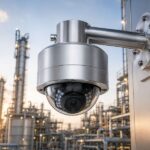
In facilities where DSEAR-classified hazardous zones extend to areas used for forklift operations — such as chemical warehouses, solvent storage areas, or areas adjacent to production processes handling flammable materials — the cameras fitted to forklifts must carry appropriate ATEX certification. Explosion proof forklift cameras are housed in certified enclosures that prevent any internal electrical event from igniting the surrounding atmosphere.
These cameras must be matched to the zone classification of the areas through which the forklift routinely travels. In many facilities, this requires close collaboration between the forklift safety team, the site’s electrical and DSEAR compliance personnel, and the camera system supplier to ensure that all components — cameras, cables, connectors, and monitors — meet the required standards.
Dust and Moisture Resistant Systems
Timber yards, aggregate handling facilities, grain stores, and recycling operations generate high levels of dust that can rapidly clog or damage standard camera lenses and housings. Forklift camera systems for these environments require high IP ratings — typically IP67 or IP69K — to resist both dust ingress and high-pressure wash-down cleaning. Robust mounting brackets and vibration-resistant connectors are equally important given the rough terrain and uneven surfaces common in these settings.
Conclusion
Hazardous operational environments place exceptional demands on forklift safety systems. Camera systems designed and certified for these conditions deliver reliable visibility enhancement where it is most urgently needed, enabling operators to work safely despite the additional challenges that extreme temperatures, low light, explosive atmospheres, and high contamination levels present. Investing in appropriately specified forklift camera systems for hazardous environments is a commitment to safety that reflects both legal compliance and genuine duty of care.
Contact SharpEagle Technology for reliable forklift camera solutions tailored to hazardous environments. Improve safety, visibility, and compliance with systems designed for ATEX zones, cold storage, and harsh industrial conditions.
SHARPEAGLE TECHNOLOGY
.