Ensuring DSEAR Compliance with Explosion Proof Cameras in the UK
The Dangerous Substances and Explosive Atmospheres Regulations 2002 represent one of the most significant pieces of workplace safety legislation affecting UK industrial operations. For any facility handling flammable liquids, gases, or combustible dusts, DSEAR compliance is not a matter of choice. As surveillance requirements in these environments grow, the use of explosion proof cameras has emerged as a critical compliance tool — one that enables effective monitoring without introducing dangerous ignition sources.
Understanding Your DSEAR Obligations
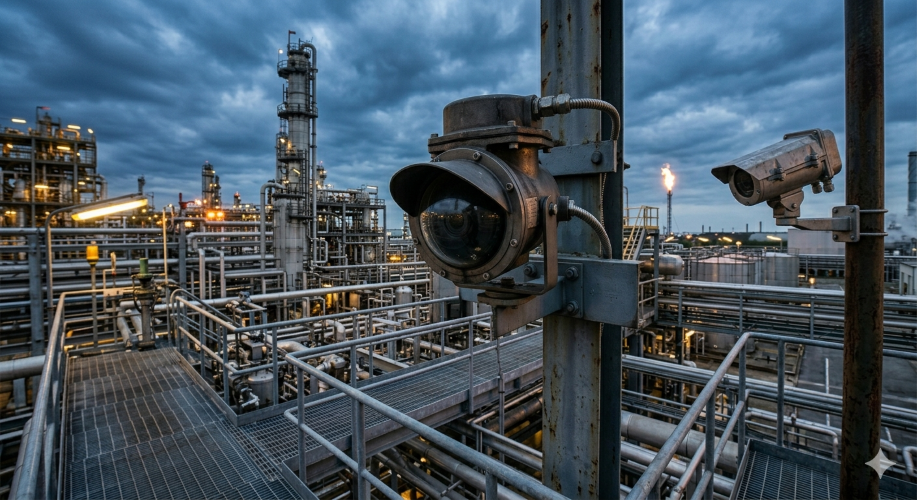
DSEAR places a duty on employers to identify dangerous substances on site, assess the risks they present, and implement appropriate control measures. Central to this is the classification of hazardous zones and the control of ignition sources within those zones. Any electrical or electronic equipment — including CCTV cameras — installed in a hazardous area must be ATEX certified to ensure it cannot ignite the surrounding explosive atmosphere under normal or fault conditions.
Failure to comply with DSEAR can result in significant penalties from the Health and Safety Executive, as well as the catastrophic consequences that can follow an industrial explosion or fire. Organisations that take a proactive approach to compliance, including the correct selection of explosion proof cameras, demonstrate a commitment to worker safety that goes beyond regulatory box-ticking.
What Makes a Camera ‘Explosion Proof’?
The term ‘explosion proof’ refers to a specific engineering standard. An explosion proof camera is housed in an enclosure strong enough to withstand the pressure of an internal explosion while also preventing hot gases or flames from escaping to the surrounding atmosphere. This is distinct from simply being weatherproof or impact-resistant.
In the UK, explosion proof cameras must carry ATEX certification under the Equipment and Protective Systems Intended for Use in Potentially Explosive Atmospheres Regulations 2016. The certification marking indicates the equipment category, gas group, and temperature class — all of which must be matched to the specific hazardous zone and substance present at the installation site.
Practical Compliance Strategies
Achieving DSEAR compliance through explosion proof camera deployment involves several practical steps. First, a thorough hazardous area classification exercise must be completed, producing zone drawings that clearly delineate classified areas. These drawings inform camera placement and specification decisions.
Second, camera selection must be based on ATEX category and certification data rather than commercial convenience. Third, installation must be carried out by competent persons familiar with hazardous area working practices. Finally, an ongoing inspection regime — aligned with BS EN 60079-17 — must be established to verify that cameras and their associated wiring remain in a safe and compliant condition.
Industries Most Affected in the UK
Explosion proof camera requirements under DSEAR are most acute in the upstream and downstream oil and gas sector, chemical and petrochemical manufacturing, pharmaceutical production, paint and coatings manufacturing, distilleries and breweries, and waste management and recycling facilities. Each of these sectors presents unique challenges in terms of zone classification, substance properties, and operational conditions — making specialist camera selection and installation guidance particularly valuable.
Conclusion
Ensuring DSEAR compliance in hazardous areas demands meticulous attention to every potential ignition source, including surveillance equipment. Explosion proof cameras provide a practical and legally sound solution for monitoring classified zones without compromising safety. By engaging qualified specialists and maintaining thorough compliance records, UK facilities can achieve the dual objective of regulatory compliance and operational excellence.
Sakshi
.