Precision Metal Components in Modern Packaging Machinery
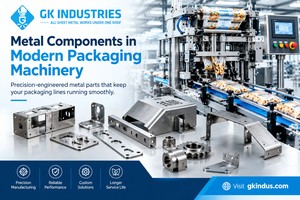
Packaging machines are built around a combination of mechanical movement, material handling, control systems and precisely manufactured components. While attention is often focused on the complete machine, the performance of a packaging line can depend heavily on the accuracy of the individual metal parts used inside it.
From support frames and brackets to guards, plates, mounting components and custom machine parts, fabricated metal components form an important part of many packaging systems.
As packaging manufacturers move toward faster production, automation and customized equipment, the quality of these components becomes increasingly important.
Why Precision Matters in Packaging Equipment
A packaging machine may operate continuously for several hours or even around the clock. Components are repeatedly exposed to movement, vibration, loading and environmental conditions.
A small dimensional error in one fabricated component can sometimes create problems during assembly. Misaligned mounting holes, incorrect dimensions or inconsistent bends may require additional adjustments before the machine can operate correctly.
Precision manufacturing helps reduce these issues by producing components according to the required drawings and specifications.
For machine builders, this means that metal fabrication is not simply a supporting activity. It is part of the engineering process.
Common Metal Components Used in Packaging Machinery
Different packaging machines require different fabricated parts. Depending on the machine design, these may include:
Machine frames
Mounting plates
Brackets
Protective guards
Support structures
Conveyor components
Covers and panels
Chutes and guides
Base plates
Custom machine parts
Enclosures
Structural assemblies
Many of these components begin as flat sheets or plates and are transformed through cutting, punching, bending, welding and finishing operations.
The manufacturing method selected depends on the material, thickness, geometry and required quantity.
CNC Cutting for Complex Profiles
Modern CNC cutting technology allows manufacturers to produce components with repeatable dimensions and complex profiles.
Computer-controlled cutting is particularly useful when a machine component contains multiple holes, slots, curves or irregular shapes. Once the design has been prepared correctly, the CNC system can follow the programmed geometry with consistency across multiple components.
Different cutting processes may be appropriate for different applications.
Laser cutting can be useful for many sheet-metal applications, while plasma and gas cutting can be suitable for particular thicknesses and industrial requirements. Waterjet cutting provides another option where a cold cutting process is preferred.
GK Industries, for example, provides CNC waterjet cutting and other fabrication capabilities for industrial components.
The Role of Waterjet Cutting
Waterjet cutting uses a high-pressure stream of water, with abrasive material used where required, to cut a workpiece.
One important characteristic of waterjet cutting is that it is a cold cutting process. This can be useful for applications where heat generated during cutting needs to be minimized.
Waterjet technology can also be used for intricate profiles and a broad range of materials. The appropriate cutting process still depends on the material, thickness, geometry and dimensional requirements of the individual component.
For packaging machinery manufacturers working with specialized machine parts, having access to different cutting technologies can provide greater flexibility during component development.
Cutting Is Only One Part of Fabrication
A finished packaging-machine component often requires more than cutting.
After a sheet or plate has been cut, it may need to be bent into a specific shape. Components can then be welded, assembled, finished or inspected depending on the application.
For example, a machine enclosure may require:
Sheet selection
CNC cutting
Hole and profile preparation
Bending
Welding or fastening
Surface finishing
Dimensional inspection
Combining these operations within a coordinated manufacturing workflow can simplify production for machine builders.
Importance of Accurate Drawings
Good manufacturing begins with clear engineering information.
A fabrication drawing should communicate dimensions, material specifications, hole locations, tolerances and other important requirements.
Digital CAD files can help manufacturers prepare CNC cutting programs and plan the production sequence.
Before manufacturing begins, engineers can also review the design to identify potential fabrication challenges. This is particularly useful when developing custom packaging machinery because modifications are generally easier to make at the design stage than after production.
Material Selection
The material selected for a packaging-machine component depends on its intended function.
Mild steel may be suitable for structural components, while stainless steel can be preferred in environments where corrosion resistance, cleanliness or particular hygiene requirements are important.
Aluminium may be selected where lower weight is beneficial.
Material thickness also influences the manufacturing process. A thin sheet may require different cutting and forming parameters from a heavy plate.
Therefore, material selection should be considered together with the mechanical and environmental requirements of the component.
Fabrication for Customized Packaging Machines
Not every packaging line is identical.
Manufacturers may need equipment designed around a specific product size, production speed, factory layout or packaging format. This creates a requirement for custom machine components rather than standard off-the-shelf parts.
Flexible fabrication capabilities can be valuable in these situations.
A supplier capable of handling cutting, bending, fabrication and related processes can help machine builders manufacture customized components without dividing the project among multiple suppliers.
Reducing Waste Through Better Manufacturing Planning
Material utilization is another important consideration.
When several components are cut from a sheet, proper nesting can help make more efficient use of the available material. This is especially relevant when working with expensive alloys or larger production quantities.
Good planning can also reduce unnecessary machine movements and simplify production.
For packaging equipment manufacturers, these improvements can contribute to more predictable component costs and production schedules.
Quality and Repeatability
Packaging machinery requires components that can be assembled consistently.
For prototype development, the first component may be used to verify dimensions and fit. Once the design is approved, subsequent production parts should maintain the required specifications.
Repeatability becomes increasingly important when multiple machines use similar components or when replacement parts need to be manufactured later.
Documented drawings, controlled CNC processes and appropriate inspection procedures can all contribute to consistent production.
Looking Ahead
Packaging technology continues to evolve as manufacturers pursue automation, higher productivity and more flexible production systems.
These developments also create new requirements for machine builders and component manufacturers. Customized equipment often requires customized metal components, and those components need to be produced with appropriate accuracy and repeatability.
The relationship between packaging-machine design and metal fabrication is therefore becoming increasingly important.
Rather than treating fabricated components as simple mechanical pieces, manufacturers can consider them an integral part of the overall machine design.
Conclusion
Precision metal fabrication plays an important supporting role in packaging machinery. CNC cutting, bending, welding and other manufacturing processes allow machine builders to create components suited to specific equipment designs and production requirements.
The right manufacturing approach depends on several factors, including material, thickness, geometry, tolerances, quantity and the intended operating environment.
As packaging equipment becomes more automated and customized, reliable fabrication processes will remain an important part of building machines that can perform consistently in demanding production environments.
GK Industries
.