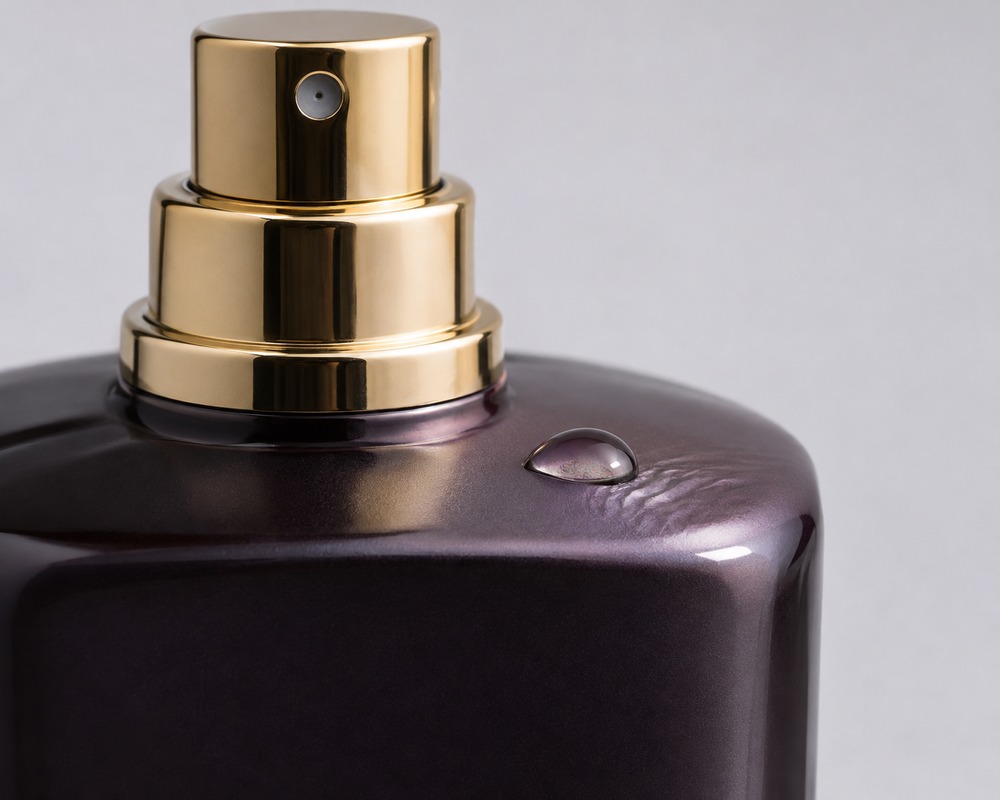
A Perfume Bottle’s Color Shouldn’t Come Off With the Fragrance
A perfume bottle can look beautiful on a shelf and still have a problem that only becomes visible after someone starts using it: the decorative finish changes when fragrance touches the outside.
In fragrance communities, consumers have described paint rubbing off, decorative films wrinkling, and finishes deteriorating around sprayers. One discussion on Reddit’s r/Perfumes described coating damage near the top of a bottle, with users questioning whether fragrance leakage or storage conditions had contributed.
These reports are not laboratory evidence. The exact coating materials and causes are unknown. But they highlight a practical question for fragrance brands:
Has the bottle’s decorative finish been evaluated against the actual perfume it may encounter?
The Glass May Be Fine. The Finish May Not Be.
Glass and its exterior decoration are different materials.
A glass bottle may remain intact while a sprayed coating, printed layer, metallic effect, or decorative film changes appearance after contact with fragrance.
Many perfumes contain ethanol and fragrance ingredients. Depending on their composition, contact conditions, and the decorative materials involved, they may affect some finishes.
The distinction matters because coating adhesion, chemical resistance, and abrasion resistance are not interchangeable.
A finish may adhere well to glass but still soften after contact with a particular fragrance. Another may resist short-term liquid exposure but show visible wear after repeated handling.
This is why visual approval alone cannot establish whether a decorated bottle is suitable for everyday use.
First, Find Out Where the Fragrance Is Coming From
Before changing the coating, examine where the damage occurs.
If deterioration is concentrated around the bottle neck or sprayer collar, look for evidence of liquid accumulating after dispensing. Observe the spray pattern, check for residue, and examine the assembled dispensing components.
If the damage is scattered across the bottle, consider other possible exposure during filling, cleaning, handling, or storage.
A coating problem and a dispensing problem can exist together. Replacing the decorative finish without investigating repeated liquid contact may leave the original cause unresolved.
The practical starting point is to inspect the complete package, not just the empty decorated glass bottle.
Three Performance Questions Worth Testing
1. Does the coating remain attached?
An adhesion assessment examines how well the decorative layer bonds to its substrate.
Depending on the material and surface, a suitable tape or cross-cut method may be considered. The coating supplier should help determine which procedure is appropriate.
However, a successful adhesion result does not prove resistance to perfume.
2. What happens when the actual fragrance touches it?
Use representative decorated samples and the fragrance formulation intended for the finished product.
Agree on the contact location, exposure duration, cleaning procedure, and acceptance criteria before testing.
Examine samples for softening, tackiness, discoloration, haze, blistering, or peeling.
An unexposed reference sample provides a useful comparison.
Industrial glass-coating suppliers offer systems designed with perfume and ethanol resistance in mind. Sherwin-Williams, for example, identifies chemical resistance, abrasion resistance, and adhesion as separate characteristics of cosmetic glass coatings.
Those properties must still be verified for the selected coating system and project conditions.
3. What happens after contact and handling?
A decorated surface may appear unchanged immediately after exposure but behave differently when wiped or handled.
Where relevant, evaluate abrasion or handling performance after the agreed chemical-contact assessment.
The objective is not to create an unnecessarily harsh test. It is to represent how the packaging will actually be filled, cleaned, handled, and used.
A Practical Approval Sequence
Brands can make the review more useful by following a consistent sequence.
Step 1: Identify likely contact areas. Examine the neck, shoulder, sprayer collar, and other decorated areas that may encounter droplets during filling or dispensing.
Step 2: Compare representative samples. Keep a reference sample and record the appearance of exposed samples before and after the agreed contact conditions.
Step 3: Evaluate the assembled package. Fit the intended sprayer and cap, operate the dispenser, and inspect where fragrance residue collects.
Step 4: Record acceptance criteria. Specify what changes are unacceptable rather than using vague descriptions such as “good chemical resistance.”
The exact test methods and limits should be agreed with qualified suppliers based on the fragrance, coating system, and intended use.
What If the Finish Doesn’t Pass?
A failed sample does not always mean abandoning the bottle design.
If deterioration occurs only after fragrance contact, ask the coating supplier whether another compatible system is available and what evidence supports its suitability.
If damage appears mainly near the neck, investigate the sprayer assembly and consider whether the decoration boundary should change.
If the surface survives chemical exposure but wears during handling, focus on abrasion performance and the expected contact conditions.
Brands may also consider a different decorative treatment or a smaller coated area.
Each revision needs its own evaluation. A different finish is not automatically more resistant.
The Detail Worth Discussing Before Production
For fragrance brands, selecting a decorative finish involves more than matching a shade of gold, pink, or black.
Bottle geometry, decoration placement, sprayer assembly, and potential fragrance contact all deserve attention during development.
These decisions are connected. Moving a coating boundary may change the appearance. Adjusting the neck assembly may affect component selection. Choosing another finish may require a new evaluation against the intended fragrance.
Manufacturers such as FOLOVER PACK, whose services include glass bottle manufacturing, surface decoration, component matching, and custom packaging development, can support these related stages of a packaging project.
That does not replace appropriate testing. It gives buyers a practical basis for discussing the complete package rather than treating its bottle, finish, and dispensing components as unrelated purchases.
A beautiful perfume bottle deserves a finish selected for more than its appearance.
Before approving the color, find out what happens when the perfume touches it.
Bella Smith
.