An Induction Curing Oven Has to Handle the Stops Between Production Runs
A can production line rarely spends an entire shift running at one steady speed. Material changes, adjustments and short interruptions all affect how bodies move through the equipment. For the person selecting an induction curing oven, those ordinary moments deserve as much attention as the planned production rate. The useful question is what happens to the cans already inside the heating section when the rest of the line slows down or stops.
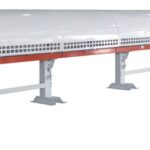
Golden Eagle & Estes addresses this situation in its induction curing oven description. The manufacturer states that its induction system can continue drying bodies left on the conveyor during certain interruptions at the welder. The product also uses fan cooling and a magnetic belt conveyor. These features give buyers specific points to discuss, especially when replacing an oven within an existing line.
Start with the coating requirements
Before discussing oven length or the number of heating units, bring the coating information into the conversation. Ask the coating supplier to identify the curing conditions and the checks used to judge the finished result. Then share those requirements with the equipment supplier.
This helps keep everyone focused on the same outcome. A body that feels warm after leaving the oven does not, by itself, establish that the coating meets the agreed requirements. The purchase discussion should identify how samples will be assessed, who will assess them and which records need to accompany the equipment trial.
Keep the actual can formats in that discussion. Golden Eagle & Estes notes that can diameter and height affect the induction area and drying capacity. A configuration proposed for one format therefore deserves another look when the production mix changes.
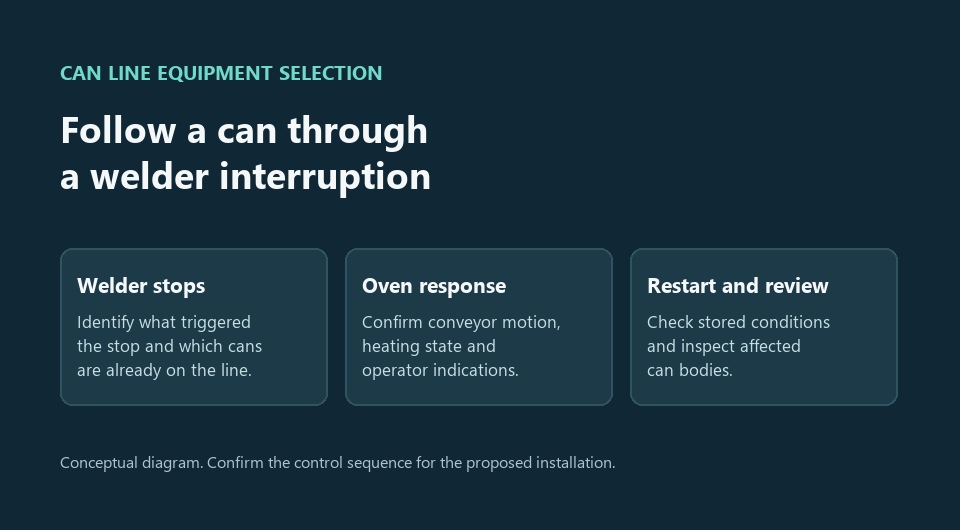
Follow a can through an interruption
Imagine a short stop at the welder while several bodies remain on the oven conveyor. What continues moving? What keeps heating? What does the operator see, and what must happen before normal production resumes?
Ask the supplier to walk through that sequence using the proposed equipment arrangement. Include the normal stop conditions that operators encounter, rather than discussing every interruption as though it were identical.
The manufacturer’s description of continued drying during certain welder interruptions is worth examining in this context. Buyers should ask which situations the function covers, how it is controlled and how the affected bodies are checked afterward. That makes the feature easier to evaluate against the plant’s own operating conditions.
Give maintenance a place in the layout
An oven can fit neatly into a drawing and still be awkward to maintain. Leave room in the planning discussion for cleaning, inspection and access to components that may need attention.
The fan cooling arrangement is one practical starting point. Ask where the fans sit, how operators identify a cooling problem and what routine cleaning the supplier recommends. Confirm the installation requirements without assuming that the cooling arrangement eliminates every other utility connection.
Bring the maintenance team into the layout review before the machine position is fixed. They can often spot access problems that are easy to miss when the discussion concentrates on conveyor heights and production flow.
Compare quotations around the same job
Two oven quotations are easier to compare when both suppliers receive the same can formats, coating requirements and operating assumptions. Ask each supplier to explain the proposed configuration against that shared brief.
Include the expected production mix, available space, interfaces with nearby equipment and the checks required before handover. Separate standard equipment from optional items so that a lower quoted price does not hide a different scope.
The resulting specification should describe what the plant needs the oven to do during a real shift. That includes steady production, routine interruptions and the work required to keep the equipment ready for the next run.
Golden Eagle
.