The Hidden Cost of Non-Compliant Cameras in UK Oil Refineries: A Risk Assessment Guide
A single HSE prosecution for a major safety breach in a UK refinery can exceed £4 million in fines — before legal costs, civil claims, or remediation are factored in. Yet every year, facilities across the country continue to operate non-compliant surveillance equipment in hazardous areas, often because the upfront cost of certified kit felt prohibitive. That calculation is dangerously wrong. The true cost of deploying the wrong camera in a classified zone isn’t measured in procurement savings. It’s measured in enforcement notices, insurance avoidance, and — in the worst cases — lives.
What “Non-Compliant” Actually Means in a Refinery Context
Let’s be direct: a standard CCTV camera installed in a Zone 1 or Zone 2 hazardous area is not simply a grey area — it is a breach of the law. Under the Dangerous Substances and Explosive Atmospheres Regulations 2002 (DSEAR), you have a legal duty to ensure that all equipment installed in areas where flammable atmospheres may exist is appropriately rated and certified.
The ATEX Directive (2014/34/EU, retained in UK law post-Brexit) sets the certification framework.
Equipment must carry the correct Ex marking, equipment group, and temperature class for its installed environment. A camera without that certification — regardless of how robust its housing looks — introduces an uncontrolled ignition source into an area specifically classified to manage exactly that risk.
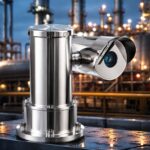
An explosion proof digital camera carries a flameproof (Ex d) rating, meaning its enclosure contains any internal ignition before it can propagate outward. A non-certified unit offers no such guarantee. The difference isn’t cosmetic. It’s the difference between a controlled engineering environment and an unmanaged liability.
The Financial Exposure You May Not Have Costed
SharpEagle Technology
.