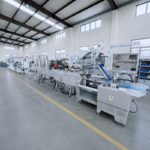
What to Check Inside a Multi-Lane Wet Wipes Production Line Before Buying
A multi-lane wet wipes production line should be evaluated as a complete system, not as a collection of separate machines. Buyers often compare headline speed first, but the real production result depends on how the folding, liquid adding, packaging, capping and downstream handling sections work together. If one station is underspecified, the whole line can lose efficiency even when the main machine looks strong on paper.
The first section to review is material feeding and folding. Wet wipe substrate is usually supplied as spunlace or hot-air non-woven fabric, and each material reacts differently under tension. A stable unwinding and slitting system helps keep each lane aligned before folding. If the fabric shifts at this stage, later liquid dosing and packaging will not correct the problem. This is why lane count, raw material width and fabric weight should be discussed together before a line is ordered.
Folding style also matters. For baby wipes, household cleaning wipes and personal care wipes, the folded substrate must fit the final pack size and dispensing style. A multi-lane line may use horizontal folding, half-fold or N-fold depending on the finished product. The goal is not only to make a neat folded piece, but to create a stack that stays stable when it moves into the packing machine. Poor stack transfer can lead to uneven packs, film waste or repeated stops.
Liquid adding is another core point. A wet wipes line needs consistent liquid distribution across all lanes. The dosing system, mixing tank, pump and spray method should match the wipe count, fabric absorbency and formula viscosity. Too little liquid creates a dry product; too much liquid can affect sealing, pack appearance and carton handling. When comparing suppliers, it is worth asking how the line controls liquid addition during speed changes and product changeover.
The packaging station is where many hidden problems appear. Film feeding, sealing temperature, punching, labeling and pack discharge must synchronize with upstream output. A fast folding section does not help if the packaging machine cannot accept stacks at the same rhythm. For 30-120 count packs, the machine also needs enough flexibility to handle different pack heights without long adjustment times. Good integration reduces manual correction and makes production planning more predictable.
Capping and labeling should also be included in the review when the product uses plastic lids. Robotic or automatic cap placement can improve consistency, but it must be matched with the pack dimensions and adhesive process. If caps shift or labels are not positioned cleanly, the finished pack may look low quality even if the wipes themselves are acceptable. For retail wet wipes, visual consistency is part of the product value.
Component brands and electrical design are practical indicators of long-term reliability. PLC, HMI, servo motors, sensors and pneumatic components affect troubleshooting, spare parts availability and operator training. Buyers should ask for a component list rather than relying only on a brochure. A transparent specification makes it easier to estimate maintenance risk and communicate with the supplier after installation.
Line layout is another detail that deserves early attention. A 12-lane system can require significant floor space for folding, wetting, packaging, capping and carton handling. The supplier should confirm machine dimensions, operator access, roll loading direction, maintenance space and power requirements. Planning these details before shipment prevents expensive layout changes when the equipment arrives.
For teams comparing full-line configurations, ZXJ Machinery has published a component-level overview of a 12-lane wet wipes production line, including folding and liquid-adding, packaging, capping and downstream sections. It is useful as a checklist when discussing raw material width, lane count, pack flexibility and automation level with suppliers.
A good wet wipes production line is therefore not defined by a single speed number. It is defined by stable material handling, accurate folding, consistent liquid adding, synchronized packaging and reliable downstream automation. Buyers who review the full process before purchasing are more likely to get a line that runs steadily after installation instead of a machine that needs constant adjustment.
Paul Ton
.