Why the Base Shape Matters in Insulated Food Delivery Bags
A chilled food order can fit inside an insulated bag and still be awkward to pack. A tray may pass through the opening but press against the closure. A bottle may stand upright at the bench but tip once the bag is lifted. Ecopack’s recent comparison of flat, gusseted and square-bottom cooler bags looks at how the shape of the base changes what happens at the packing station and during handling.
Three bases, three ways to load a bag
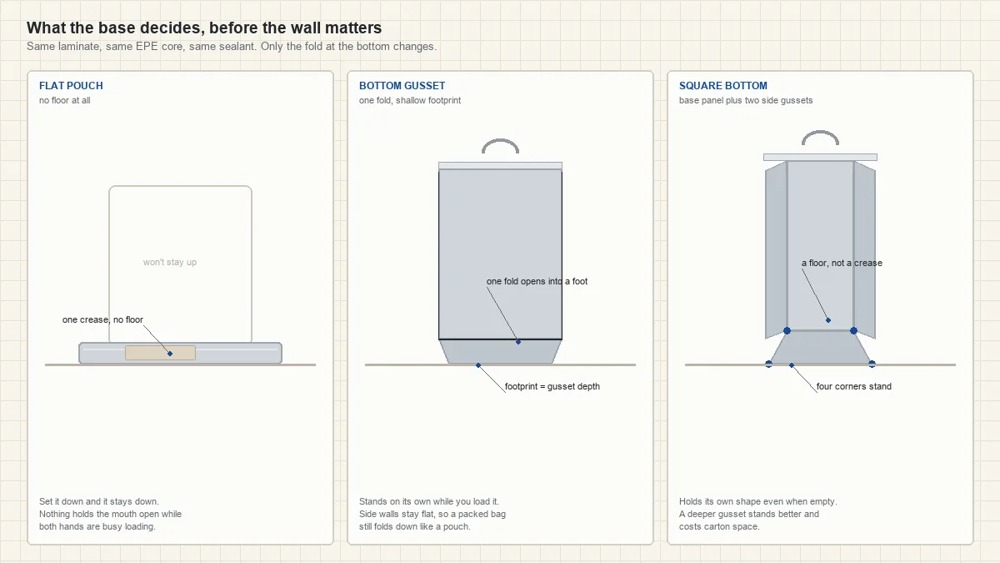
A flat pouch has no standing floor. It opens around the load and works well when a parcel can be packed flat and closed before it is moved. With a rigid tray, measure the usable opening and check where the tray sits when the pouch is closed. A tight fit can put strain on the weld or leave too little room for the closure. An oversized pouch can leave a pocket of air above the load.
A bottom gusset unfolds into a shallow base. It gives a small mixed order more depth and still lets the empty bags stack flat. Load heavier items first so they sit on the base. If the order includes a bottle, try it against the back panel and check how the closed bag balances when lifted.
A square-bottom bag has a broader support surface. Side gussets add depth, and the base opens into a panel with four corners. This shape is useful for takeaway trays and grocery orders that need to stay upright while staff load and close the bag. A taller bag alone gives a tall load more vertical room. Base depth is what gives it room to sit securely.
Check the fit with a real order
Pack a sample using the actual tray, bottles and any cold packs that will ship with the order. Check that the tray can sit level, that the closure lies clear of the load, and that the bag remains stable when picked up and set down. Record the usable opening, internal base depth and loaded height. These measurements give the supplier a clearer brief than the outer dimensions alone.
For chilled orders, assess thermal performance separately using the loaded pack and the expected delivery conditions. The base shape helps keep the contents in position. The insulation, closure, cold packs and route conditions also affect how the pack handles heat gain. The meal kit insulated packaging guide illustrates how tray fit and unused space affect a flat pouch.
Image credit: Ecopack. Comparison of flat, bottom-gusseted and square-bottom cooler bag bases.
Ecopack
.