Explosion Proof Fixed Camera Guide for UAE Warehouses
Best Practices for Deploying Explosion proof Fixed Camera Systems in UAE Warehouses Handling Hazardous Materials
A pallet of aerosol cans stored too close to a charging bay is all it takes to turn a routine shift into an incident report. Warehouses across Jebel Ali, Dubai South and the logistics corridors of Abu Dhabi increasingly store flammable liquids, aerosols and lithium-ion batteries under one roof, often alongside general cargo. That mix raises the stakes for continuous monitoring. Getting camera deployment wrong — poor placement, wrong certification, gaps in coverage — leaves blind spots exactly where you can least afford them. This guide sets out how to plan, specify and operate an Explosion proof Fixed Camera system that holds up under warehouse conditions.
Understanding Your Warehouse Risk Profile
Hazardous material storage in UAE logistics hubs rarely fits a single risk category. Flammable liquids sit in drum stores, aerosols occupy dedicated cages, and battery charging areas for forklifts and pallet trucks introduce thermal runaway risk many facilities underestimate. The zoning logic is not new to industry — an Explosion proof Fixed Camera for oil and gas installation follows the same certification principles a warehouse now needs, even though the storage risk differs. Each zone carries a different likelihood of an explosive atmosphere forming, which is exactly why a blanket approach to camera specification falls short. Before you place a single unit, you need a clear picture of where flammable vapour concentrations could realistically build, and how that risk shifts during loading, staging and dispatch.
Site Survey Checklist: Mapping Zones and Camera Placement
A proper site survey does more than tick a compliance box — it determines whether your cameras actually see what matters. Work through these points:
Map hazardous area zones against your warehouse layout, including battery charging bays and aerosol storage cages.
Identify aisle intersections and loading dock approaches where forklift and pedestrian traffic overlap.
Check storage rack heights against camera field-of-view to avoid coverage gaps above pallet level three.
Note existing lighting, structural obstructions and cable routing before finalising mounting points.
Confirm each proposed location against the zone classification it actually falls within.
Skipping this step is the single most common reason warehouses end up with cameras that technically work but don’t cover the areas that matter during an incident investigation.
Camera Features That Actually Matter
Not every specification on a datasheet earns its place in a warehouse. Prioritise:
Fixed-lens field-of-view options matched to aisle width, rather than one lens across the site.
Vandal-proof housings, since warehouse cameras sit within reach of forklifts and general traffic.
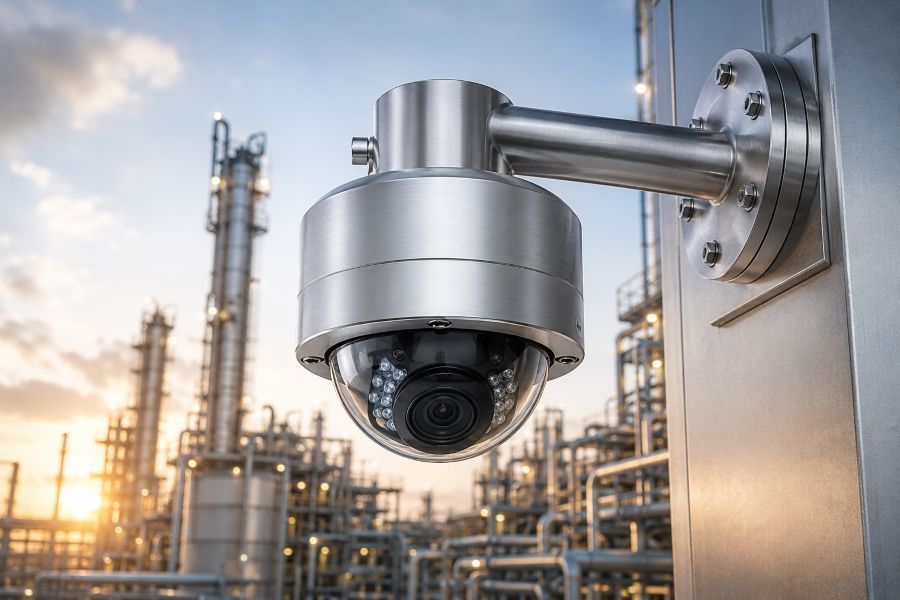
An ATEX certified Explosion proof Fixed Camera for any zone where flammable vapour or dust is present, with certification matched to the specific gas group on site.
Analytics for object detection, flagging blocked fire exits, obstructed sprinkler heads or pallets stacked beyond approved heights.
An Explosion proof fixed camera for hazardous areas without object detection still protects against ignition risk, but you lose the operational value that turns a camera network into a genuine safety tool rather than a passive recorder.
Lighting, Clarity and Coordination
Warehouse lighting rarely stays consistent. Loading docks swing between bright daylight and dim interior stacking zones within metres, so HDR performance matters more here than in most other industrial settings. Supplemental lighting and IR capability fill the gaps during night shifts and in aisles where natural light never reaches. Without this, footage from the moment you need it — a near miss during forklift charging, an unattended aerosol cage — can be unusable.
Operationally, define your escalation path before go-live: who reviews flagged footage, how quickly an alarm reaches the shift supervisor, and what triggers a physical response. Set footage retention periods that satisfy both internal audit needs and DSEAR-aligned documentation requirements, and keep evidence handling procedures tight enough to withstand scrutiny if an incident occurs. Build in regular drills with your fire and safety team, giving emergency responders direct camera access during live incidents rather than routing every request through IT.
Vendor Selection: What to Check Before You Sign
The best camera specification still fails if support isn’t there when you need it. Confirm your vendor holds local spare parts inventory rather than relying on overseas shipments, and ask what response time they commit to for a failed unit in a classified zone. Training matters just as much as hardware — your warehouse managers should be able to run first-line diagnostics and interpret analytics alerts without waiting on a call-out. A supplier offering a hazardous area ATEX Explosion proof Fixed Camera without local training support is only giving you half the solution.
SharpEagle Explosion proof Fixed Camera
For warehouses ready to specify, the SharpEagle Explosion proof Fixed Camera combines full ATEX, IECEx and UKCA certification with a vandal-resistant housing built for high-traffic storage environments. Its wide dynamic range handles the lighting swings typical of loading docks and interior racking, while built-in object detection flags blocked exits and unsafe stacking without additional software layers. The unit’s flexible field-of-view options suit both narrow aisles and open staging areas from a single product family. As a SharpEagle industrial explosion proof fixed camera supplier UAE, the company also provides on-site training and maintains regional spare parts stock, addressing the two gaps that most often undermine hazardous area camera deployments.
Getting Deployment Right the First Time
A well-planned camera network protects more than your compliance file — it protects the people working your aisles and charging bays every shift. Treat the site survey, certification and vendor selection as one connected decision, not three separate purchases, and your warehouse will be harder to catch out during an audit or incident review. As hazardous material storage grows across UAE logistics hubs, get in touch with SharpEagle Technology to plan a deployment built around your actual risk profile.
SharpEagle Technology
.