Aluminum Bottles or Aerosol Cans? How Dispensing Requirements Shape Personal Care Packaging
The container material is only one part of a packaging decision. Dispensing method, formulation, filling equipment and the intended user experience determine which aluminum format is appropriate.
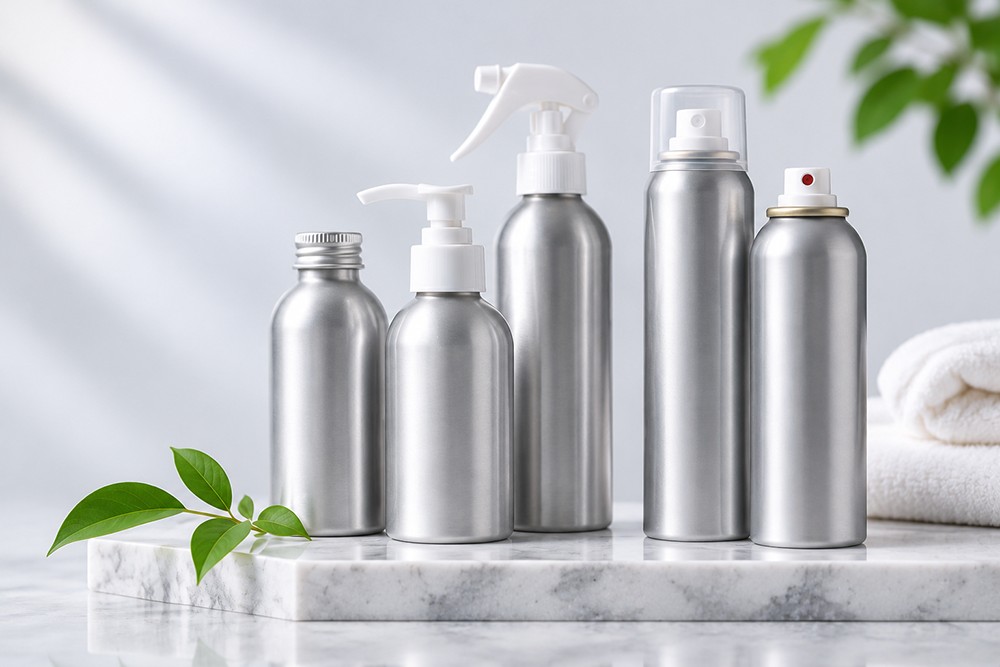
Two personal care products may use similar-looking aluminum containers yet operate in very different ways. A pump bottle releases product through a mechanically operated closure. An aerosol dispenser uses stored pressure to drive product through a valve and actuator. Their metal bodies may look alike on a shelf, but their component systems, filling processes and performance requirements are not interchangeable.
As aluminum appears across more haircare, skincare, deodorant and body-care ranges, the useful starting point is not simply whether a product can be packed in aluminum. It is how the formulation needs to be dispensed, protected and handled throughout its life.
Start with the way the product is dispensed
A non-pressurized aluminum bottle can be fitted with a screw closure, lotion pump, treatment pump or spray pump, depending on its neck finish and the product’s characteristics. This format is often suitable for liquids, lotions and other formulations that consumers apply in individual strokes or doses. The pump draws product through a dip tube and delivers it when the user operates the mechanism.
An aerosol dispenser works differently. A propellant or compressed gas supplies the energy that moves the formulation through a valve and actuator. The result may be a continuous spray, a fine mist or another defined discharge pattern. The formulation, valve, actuator and pressure system work as a package; changing one component can affect output and user experience.
For example, a leave-in hair treatment intended for controlled, occasional application may suit a pump bottle. A styling product designed for broad and consistent coverage may be developed around an aerosol system. The desired spray pattern, output rate and application feel help determine which route is appropriate.
Different closures mean different production requirements
For a conventional bottle, the filling sequence generally involves dosing the product, fitting the pump or closure and checking the seal and dispensing function. Relevant line controls can include fill accuracy, closure torque, pump priming and leakage.
Aerosol production adds operations associated with the valve and pressurized contents. Depending on the system, the line may require valve placement and crimping, propellant or compressed-gas filling, pressure-related checks and finished-package leak testing. A line designed for ordinary screw-cap bottles cannot be assumed to process aerosol containers without suitable equipment and process controls.
The interfaces are different, too. Threaded bottle finishes such as those shown in this aluminum screw-bottle specification example are designed to mate with compatible closures. Aerosol containers use a valve-mounting and sealing arrangement, illustrated in this aluminum aerosol-can product reference. These formats should not be treated as interchangeable simply because both use aluminum.
Formulation compatibility involves every product-contact surface
An aluminum container is not automatically suitable for every formulation. The inside surface may use a protective coating to separate the contents from the metal, but the coating is only one part of the contact system.
In a pump bottle, the formulation may also contact the dip tube, pump chamber, seals and other closure components. In an aerosol package, relevant materials can include the valve, gaskets and actuator pathways, as well as the internal coating. Alcohol, fragrance ingredients, solvents and other formulation components can influence material selection and long-term performance.
Compatibility work should therefore examine the filled package as a complete system. Depending on the product, checks may cover corrosion, coating integrity, leakage, changes in the formulation and dispensing consistency during storage. Testing conditions should reflect the product’s intended shelf life, distribution environment and use.
Bag-on-valve is a distinct option
Bag-on-valve (BOV) technology provides another way to dispense a product from a pressurized package. The formulation is held inside a flexible bag, while compressed gas occupies the space between the bag and the outer container. When the valve is operated, the gas compresses the bag and pushes the product out without mixing the propellant with the formulation.
This separation can be useful for certain formulations and dispensing requirements, but BOV remains a pressurized system. Its bag material, valve, filling process and container configuration differ from both a conventional aerosol and a non-pressurized pump bottle. A technical overview of the format is available in this bag-on-valve packaging reference.
Package design shapes use as well as appearance
The dispensing mechanism influences how consumers interact with a product. A pump provides a measured action with each stroke; an aerosol actuator can offer continuous or finely controlled discharge. The choice affects application speed, hand position, spray coverage and the amount of product delivered during use.
Aluminum also offers a broad surface for printed graphics and a consistent visual language across a product range. A brand might use a pump bottle for a liquid treatment and an aerosol can for a styling spray while coordinating color, typography and finish. The packages can look related without forcing different formulations into the same container design.
What a useful packaging brief should specify
A packaging brief becomes more actionable when it describes the finished product and its operating conditions, rather than listing only a preferred capacity or container shape. At minimum, it should identify:
- the formulation type, including relevant alcohol, solvent or fragrance content;
- the intended dispensing behavior, such as a measured dose, fine mist, continuous spray or foam;
- the preferred pump, closure, valve or actuator, if already selected;
- the filling method and the equipment available at the filling site;
- the target market and the applicable packaging and product requirements.
These details help establish whether a conventional aluminum bottle, an aerosol dispenser or a BOV system is the more suitable starting point. They also make it easier to identify the components and filled-package tests that need to be included before production approval.
Regulatory and end-of-life considerations
Pressurized dispensers are subject to requirements that do not apply in the same way to ordinary bottles. In the European Union, aerosol dispensers within the scope of the Aerosol Dispensers Directive are covered by provisions addressing matters such as pressure hazards and, where relevant, flammability and inhalation risks. Requirements in other markets may differ.
End-of-life claims also need to describe the complete package. Aluminum is recyclable, but collection and processing can be affected by residual product, valves, pumps, mixed materials and local recycling infrastructure. The recyclability of the metal body alone does not establish the recovery rate or environmental performance of the finished pack.
The practical distinction is clear: an aluminum bottle and an aluminum aerosol can are not simply two shapes made from the same material. They are different packaging systems. Matching the system to the formulation, dispensing behavior and filling process is what turns a material choice into a workable package.
Pony
.