Inside Ecopack: How a Huizhou Packaging Manufacturer Approaches Insulated Bags and Mailers
A food manufacturer packing chilled meal trays and an online retailer shipping temperature-sensitive goods may both ask for an insulated bag. At the packing bench, they face different problems. The food manufacturer needs a bag that can hold a tray level while staff load and close it. The retailer may need a flat mailer that fits inside an outer carton without putting pressure on the closure. The shape of the load and the way it moves through fulfilment help determine which format makes sense.
Founded in 2011 in Huizhou, Guangdong, China, Ecopack manufactures custom flexible packaging. Its product range includes insulated bags and mailers, along with packaging for coffee, pet food and other applications. Within its thermal range, the company offers flat pouches, gusseted bags and square-bottom formats for different loading and handling requirements.
The contents determine the bag shape
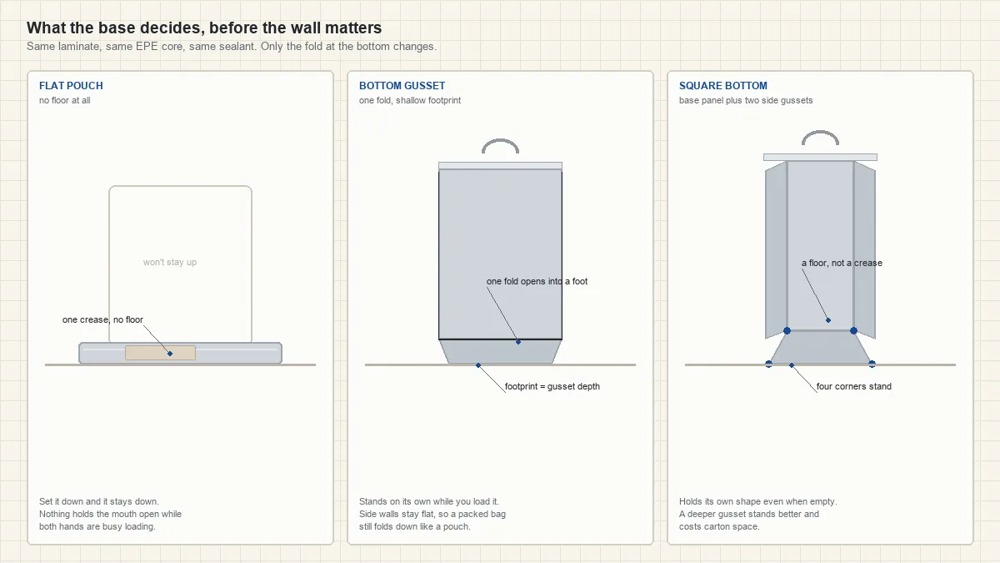
A square-bottom bag opens into a standing base, which can be useful for takeaway trays and grocery orders that need to stay upright during filling. A bottom gusset gives a bag more depth when opened while allowing empty bags to stack flat. A flat insulated pouch works well when the parcel can be loaded flat and closed before it is moved.
The closure is another part of the packing decision. One of Ecopack’s kraft paper meal-delivery bags uses a square base and a fold-over flap held by hook-and-loop tabs, so staff can reopen it when needed. An aluminium foil delivery bag uses a bottom fold, a tape closure and a reinforced die-cut handle for carrying. Ecopack’s thermal and insulated packaging range shows how these features are combined across different formats.
What buyers can check during sampling
Ecopack’s manufacturing process includes printing, lamination, slitting and pouch converting. Its published quality checks cover incoming materials, production and finished goods. Depending on the product, these include print registration, laminate bond strength, dimensions and seal integrity.
For a buyer, a useful sample trial starts with the actual order. Pack the tray, bottles and cold packs that will travel together. Check whether the load passes through the usable opening, whether the closure sits clear of the contents and whether the bag remains stable when lifted and set down. These observations give the supplier a more useful brief than external width and height alone.
If a shipment has a defined temperature requirement, evaluate the complete pack under representative delivery conditions. Bag construction, the closure, the starting temperature of the load, the coolant and the route all affect the result. A sample that loads cleanly and handles well has passed one part of the assessment. A thermal trial answers a separate question about the shipment itself.
For teams comparing suppliers, a productive first conversation can start with three details: what goes in the bag, how staff will pack and close it, and what happens between dispatch and delivery. With those details, Ecopack can discuss a suitable bag format and the specifications to confirm on a sample.
Image credit: Ecopack
Ecopack
.