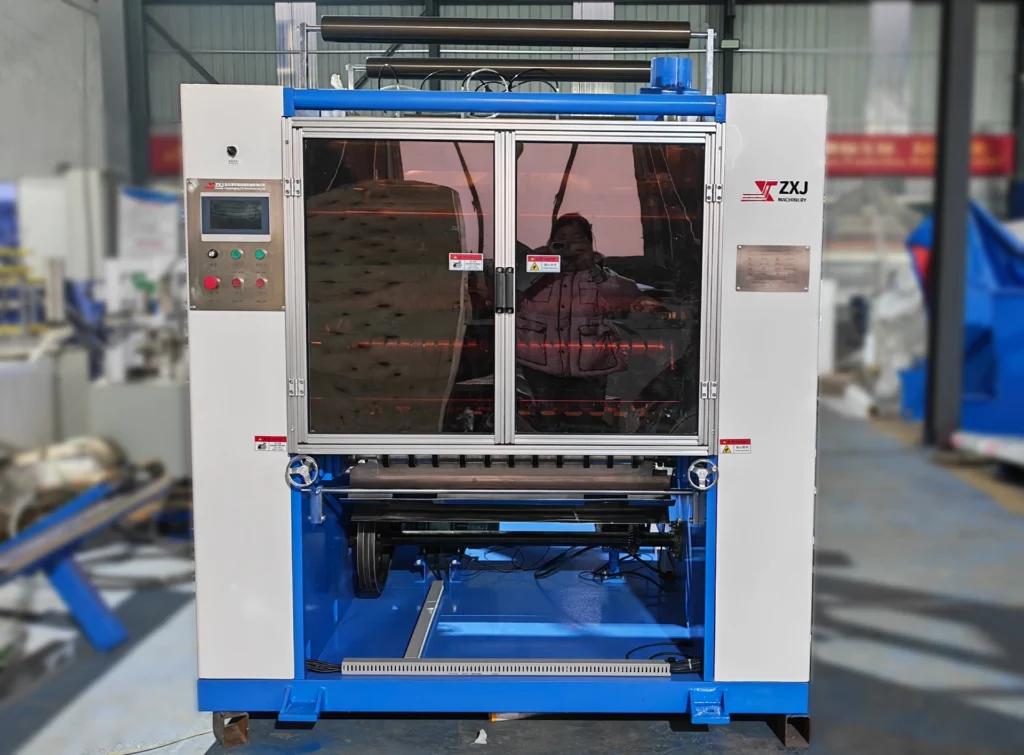
Servo Control and Mechanical Folding Choices in Disposable Sheet Packaging Lines
Disposable sheet products look simple at the point of use, but the converting and packaging line behind them must manage several variables at the same time: material tension, fold timing, counting accuracy, stack stability and downstream wrapping. This is especially true for non-woven towels, wet wipes, deli paper, silicone paper, greaseproof paper and pre-cut aluminum foil sheets.
When a manufacturer selects folding equipment, one of the most practical decisions is whether the line should rely mainly on mechanical folding systems, servo-controlled motion, or a hybrid arrangement. The best answer depends on product range, target speed, material behavior and the expected frequency of changeovers.
Mechanical folding systems are often valued for their simplicity. Once the product size and folding pattern are stable, a well-built mechanical folder can run consistently for long production shifts. It can be easier for plant technicians to understand, adjust and maintain. For converters focused on one or two high-volume SKUs, mechanical systems may provide a strong balance of output and cost.
Servo-controlled sections become more valuable when product specifications change often. A servo system can adjust motion profiles, timing and positioning through recipes, reducing the need for repeated mechanical adjustment. This can help when a line must process different sheet lengths, stack counts or folding styles during the same week. Servo control is also useful when tighter synchronization is needed between unwinding, folding, counting, stacking and wrapping.
However, servo control alone does not solve every production issue. The feeding section, guide design, static control, web tension and stack transfer still need to be engineered around the material. A silicone paper sheet may slide differently from a non-woven towel. Aluminum foil may crease, rebound or mark if the contact path is not designed carefully. Greaseproof and deli paper grades can also vary in stiffness, coating and surface friction. These differences should be tested before finalizing the folder layout.
For many disposable sheet applications, a hybrid design is the most practical choice. The line may use a mechanically stable folding path while adding servo-driven positioning, counting or stack-transfer control where flexibility matters most. This avoids adding unnecessary complexity while still giving operators better control over the variables that affect final pack quality.
Before investing in a folding line, manufacturers should define the real operating window rather than only the maximum speed. Important questions include: What is the normal sheet size tolerance? How many stack counts will be produced? How often will operators change materials? What reject rate is acceptable after the wrapping section? Does the packaging format require very square stacks, or can it tolerate small variation?
A reliable line is not simply the fastest machine on paper. It is the machine that can hold fold accuracy, counting stability and stack quality under normal factory conditions. For converters comparing machine layouts, technical notes and application examples can be useful before discussing a custom specification. ZXJ Machinery shares more practical packaging and converting machine notes at https://www.zxjmachinery.com/blog/ .
In summary, mechanical folding, servo control and hybrid designs all have a place in disposable sheet packaging. The right choice should be based on the material, product mix and production model rather than on one technology label. A careful review of these factors can reduce downtime, improve pack appearance and make future product changes easier to manage.
Paul Ton
.