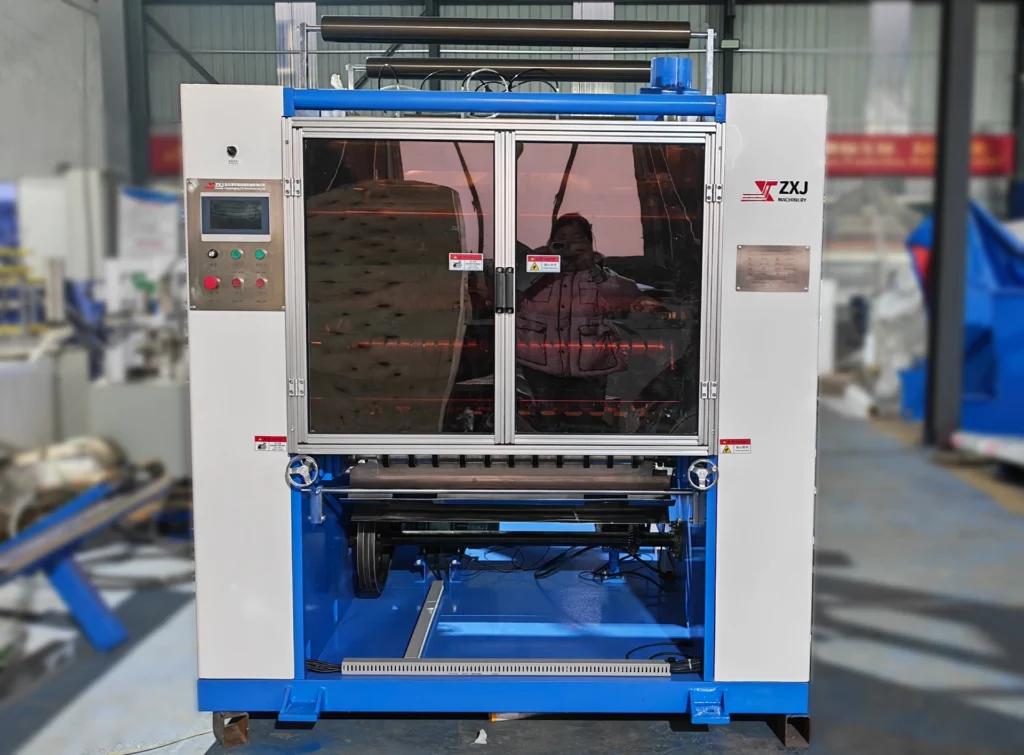
Silicone Paper Folding Machines and PFAS-Free Greaseproof Paper Production
Greaseproof paper is becoming more important in foodservice packaging because buyers want paper-based formats that can replace or reduce plastic use. At the same time, many export markets are paying closer attention to fluorinated substances and PFAS-related restrictions. For converters, this makes the production process more technical than it may first appear.
A silicone paper folding machine is used to convert coated or treated paper rolls into folded sheets that can be packed for food wrapping, bakery use, deli counters, take-away service or similar applications. The equipment must handle paper that may have a smooth or low-friction surface, while still keeping the fold accurate and the finished stack clean.
The first production challenge is web tension. Greaseproof and silicone-treated paper can react differently from ordinary paper during unwinding and folding. If tension is too low, the web may wander and create uneven edges. If tension is too high, the paper can deform, curl or create unstable folds. Automatic tension control and a stable unwinding section are therefore important for consistent production.
The second challenge is fold accuracy. Foodservice buyers usually expect sheets that open easily, dispense cleanly and fit the final carton or bag without excessive variation. Small errors in folding can become visible after counting and stacking, especially when the product is packed as pre-folded sheets for restaurants or commercial kitchens.
Cutting and counting accuracy also matter. A production line may look efficient at the folding section, but if the sheet count is inconsistent, the final pack creates customer complaints and rework. For this reason, converters should evaluate the complete path from roll loading to finished stack, not only the stated machine speed.
For PFAS-free greaseproof paper projects, material testing should happen before mass production. Paper stiffness, coating behavior, surface friction and moisture resistance can all influence machine settings. A sample run helps determine whether folding plates, guiding parts, cutting tools and delivery systems need adjustment for the chosen material.
Packaging integration should not be ignored. Folded greaseproof sheets often go into cartons, bags or pop-up style packs. The stack must be neat enough for the next step, otherwise operators or downstream packaging equipment must correct the problem manually. A stable stack is part of the product quality, not just a handling detail.
Factories planning export-oriented production should also consider changeover. Different customers may ask for different sheet dimensions, fold formats and pack counts. Recipe storage, clear touchscreen operation and accessible mechanical adjustments can reduce the time needed to move from one order to another.
Maintenance access is another practical factor. Paper dust, cutting wear and small alignment changes can gradually affect output quality. Operators should be able to inspect knives, sensors, belts, rollers and guides without long stoppages. Simple access often has a direct effect on daily production efficiency.
ZXJ Machinery publishes technical notes on folding machines for paper, non-woven materials and related disposable product lines here: https://www.zxjmachinery.com/blog/
In summary, silicone paper folding equipment should be selected according to material behavior, fold quality, counting reliability and packaging connection. For greaseproof paper and PFAS-free export products, stable converting is what turns the material promise into a commercially reliable finished pack.
ZXJ Machinery
.