Sourcing a Pet Food Production Line in China? What About Whole-Meat Treats?
Open a bag of dried chicken treats, and the product tells part of its own story. The shape follows the cut of the meat. The surface shows visible fibres. Some pieces are wider than others. For a brand selling whole-meat treats, those details may be part of the appeal.
They also give the factory a different job from making a snack from ground meat. The production route needs to start with the cut you want to preserve. Longer Machinery’s Fresh Meat Dried Slice Production Line is designed around that approach, using whole fresh meat for sliced, dried pet treats.
Begin with the meat you can actually buy
A development team may choose an attractive piece of chicken for its first sample. Your regular deliveries may include a wider range of sizes and shapes. Before discussing equipment, look at the size, shape, and condition of the meat your purchasing team expects to receive.
Share photographs and representative material with the supplier. Include your trimming requirements and explain what variation is acceptable. This helps keep the equipment conversation connected to everyday production.
When sourcing a pet food production line in China, a clear raw-material brief makes proposals easier to compare. Each supplier should assess the same incoming meat and the same finished-product requirements.
Whole-muscle slices need their own process
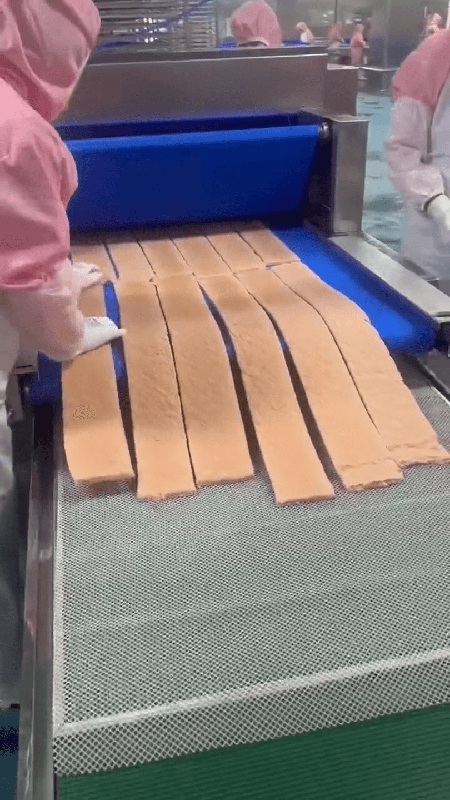
Longer’s Fresh Meat Dried Slice Production Line lists trimming, fresh-meat slicing, vacuum tumbling, heat-pump drying, cooling, grading, inspection, and packaging among its stages.
Direct slicing of whole fresh meat preserves the original cut. That makes the line relevant when visible meat texture is central to your range.
The listed tumbling stage also deserves a conversation. Explain whether your planned product is plain or uses a marinade, then have the supplier identify the configuration required. A plain chicken slice and a seasoned product should each have a clearly defined route.
Decide how much natural variation belongs in the bag
Whole-meat treats can vary in appearance and still have a consistent product identity. Your team needs to agree on the boundaries.
A range of lengths may be acceptable, with a narrower limit on thickness. Smaller intact slices may go into the same bag, while loose fragments may need to be separated. Put those decisions into a simple sample guide.
This gives production and quality staff a shared reference. It also gives the supplier something useful to demonstrate during slicing and grading.
Evaluate the treat after the full process
Freshly sliced meat is an intermediate result. Your assessment should follow the product through the proposed drying, cooling, and packing arrangement.
Keep sample sets from agreed points in the run. Compare their appearance and handling against your reference guide, and record the preparation and operating conditions behind them.
Have your quality team define the testing needed for the intended product and storage conditions. The equipment discussion should establish how the proposed line supports those requirements, including which measurements and records operators can obtain.
Plan for more than the attractive slices
A useful production discussion also accounts for trimming, smaller pieces, and material that falls outside your chosen specification. Decide how each will be collected and recorded.
That information helps you understand the relationship between incoming meat and accepted packed output. It gives your purchasing team a better basis for comparing a proposal than a headline capacity figure alone.
For Longer’s dried-slice line, start with one actual cut of meat, one finished-product standard, and a documented demonstration. From there, your team can judge whether the proposed equipment fits the treat you want customers to recognise in the bag.
Image credit: Longer Machinery, Fresh Meat Dried Slice Production Line product page.
Longer Machinery
.