Pizza Box Packaging Guide: Everything You Need to Know
Pizza packaging plays an important role in food delivery, takeaway services, and customer satisfaction. Restaurants need packaging that keeps food protected, supports heat retention, and makes transportation easier. A well-designed Pizza Box helps reduce movement during delivery while providing space for restaurant branding and essential product information. Understanding packaging materials, box sizes, ventilation, and printing options can help food businesses choose practical solutions that meet their daily operational needs.
What Is a Pizza Box and Why Is It Important?
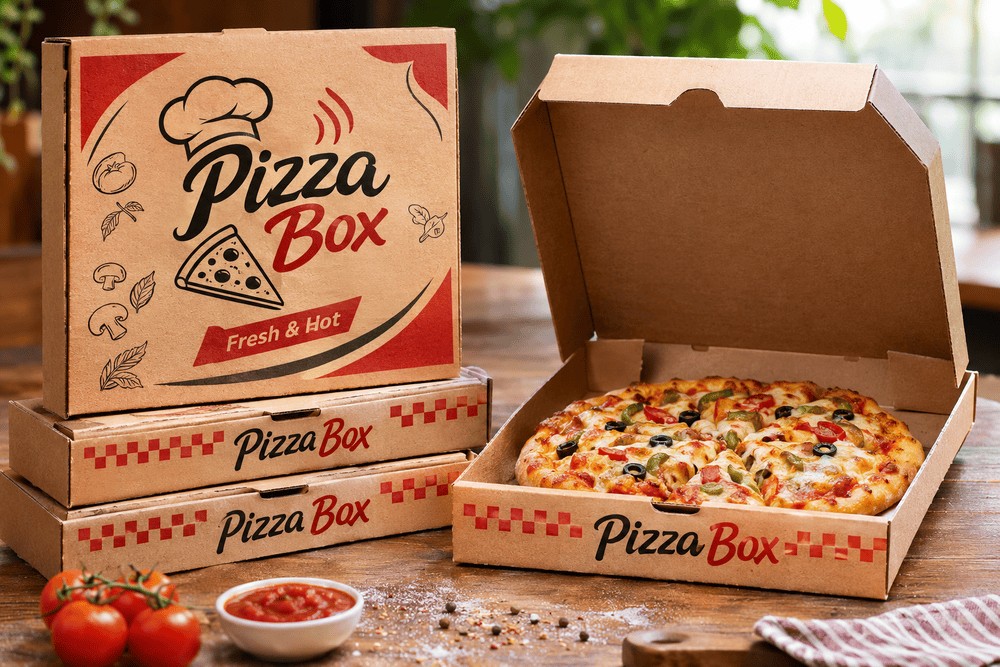
A pizza box is a food packaging container designed to hold and transport freshly prepared pizza. Most pizza boxes are made from corrugated cardboard or paperboard, depending on the size, weight, and intended use.
The main purpose of pizza packaging is to protect the food during handling and delivery. A properly designed box provides structural support, helps retain warmth, and reduces direct contact with external surfaces.
For restaurants offering takeaway and delivery services, packaging also influences customer experience. Boxes that are difficult to open, poorly fitted, or unable to support the pizza can create unnecessary problems.
Common Materials Used in Pizza Box Packaging
Corrugated Cardboard
Corrugated cardboard is widely used for pizza packaging because its fluted structure provides strength and insulation.
The material helps support the weight of the pizza and offers some protection against temperature changes. Single-wall corrugated board is commonly suitable for standard takeaway boxes.
Kraft Paperboard
Kraft-based packaging is often selected for its natural brown appearance and practical printing options.
Depending on its construction, kraft material can be used for lightweight food cartons or corrugated pizza boxes.
Businesses should confirm that the selected packaging is suitable for its intended food-contact application.
Recycled Paperboard
Some pizza boxes contain recycled paper fibres. Recycled content can reduce demand for virgin fibre, although food-contact suitability depends on material composition and applicable safety requirements.
Manufacturers may use appropriate barriers or virgin-fibre contact layers where necessary.
How to Choose the Right Pizza Box Size
Selecting the correct box dimensions helps prevent unnecessary movement and reduces excess packaging material.
Common pizza box sizes include:
|
Pizza Size |
Typical Box Dimensions |
Common Use |
|
Small |
8 × 8 inches |
Personal pizzas |
|
Medium |
10 × 10 inches |
Small sharing portions |
|
Large |
12 × 12 inches |
Standard takeaway pizzas |
|
Extra Large |
14 × 14 inches |
Family-sized pizzas |
|
Party Size |
16 × 16 inches |
Group orders |
These are illustrative dimensions. Actual sizes vary by restaurant and supplier.
Restaurants should measure their pizzas, including crust edges, before selecting packaging. Adequate internal clearance helps prevent toppings from contacting the lid.
Essential Features of Good Pizza Packaging
Strong Box Construction
A pizza box should maintain its shape during handling, stacking, and delivery. The required board strength depends on the pizza’s weight, moisture level, and transportation conditions.
Proper Ventilation
Fresh pizza releases steam after baking. Without suitable ventilation, moisture can accumulate inside the packaging and soften the crust.
Ventilation openings can help moisture escape, although their placement and size should balance steam release with heat retention.
Food-Safe Materials
Packaging intended for direct food contact must meet applicable food safety requirements.
Restaurants should request material specifications from suppliers and confirm whether coatings, inks, and internal surfaces are appropriate for the intended use.
Easy Assembly and Handling
Foldable packaging that is easy to assemble can support faster service during busy periods.
Secure closing tabs and suitable box dimensions also make handling more convenient for restaurant staff and delivery drivers.
How Custom Pizza Boxes Support Restaurant Branding
Packaging is often one of the first physical interactions customers have with a takeaway brand.
Custom printing allows restaurants to display their logos, contact details, website addresses, and promotional messages directly on their boxes.
Businesses exploring packaging options through Search Packaging can consider different box dimensions, printing styles, and material specifications according to their operational needs.
A consistent packaging design helps customers recognise the restaurant and distinguish its products from competing businesses.
However, effective branding should not compromise structural strength, food safety, or ease of use.
Understanding Pizza Box Printing Options
Printing methods vary according to order quantity, artwork requirements, and packaging materials.
Flexographic Printing
Flexographic printing is commonly used for corrugated packaging. It is suitable for repeated designs and larger production runs.
Digital Printing
Digital printing allows businesses to produce detailed artwork without traditional printing plates. It can be useful for smaller quantities, promotional designs, and frequent artwork changes.
Offset Printing
Offset printing can produce detailed graphics and consistent colour reproduction, often using printed sheets that are later mounted onto packaging board.
Restaurants should compare setup costs, minimum order quantities, and print requirements before choosing a method.
Are Pizza Boxes Environmentally Friendly?
The environmental impact of pizza packaging depends on material sourcing, manufacturing, transportation, and disposal.
Many cardboard pizza boxes can be recycled when they meet local recycling requirements.
However, excessive food residue, plastic coatings, and mixed materials may affect recyclability.
Restaurants can reduce unnecessary packaging waste by selecting appropriately sized boxes, avoiding excessive decorative materials, and checking local recycling guidance.
Clear disposal instructions can also help customers understand how to handle used packaging.
How to Select a Reliable Pizza Box Supplier
Choosing the right packaging supplier is important for maintaining consistent quality and avoiding unnecessary operational delays.
Before ordering, restaurants should consider:
- Material strength and food-contact suitability.
- Available box sizes and custom dimensions.
- Printing quality and artwork requirements.
- Minimum order quantities and pricing.
- Sample availability and production lead times.
- Delivery reliability and customer support.
Requesting samples allows businesses to test box assembly, lid clearance, stacking strength, and suitability for actual pizzas.
Restaurants should also evaluate the total cost of packaging, including printing, transportation, and storage.
Conclusion
Choosing the right pizza packaging involves more than selecting a cardboard container. Restaurants need to consider material strength, food safety, box dimensions, ventilation, printing quality, and delivery requirements.
A suitable Pizza Box helps protect food during transportation while supporting practical handling and consistent brand presentation. By comparing materials, testing samples, and working with reliable suppliers, food businesses can select packaging that meets their operational needs and customer expectations.
Frequently Asked Questions (FAQs)
What material is commonly used for pizza boxes?
Corrugated cardboard is widely used because it provides structural support, insulation, and practical handling for takeaway pizzas.
What is the standard size of a pizza box?
Common sizes include 10, 12, 14, and 16 inches, although dimensions vary depending on the pizza and restaurant.
Can pizza boxes be customised with a logo?
Yes. Restaurants can print logos, brand colours, contact details, and promotional information on custom pizza boxes.
Are used pizza boxes recyclable?
Many cardboard pizza boxes are recyclable, but acceptance depends on food contamination, coatings, and local recycling rules.
Why do pizza boxes have ventilation holes?
Ventilation holes allow some steam to escape, helping reduce moisture buildup that can soften the pizza crust.
Search Packaging
.