Rotogravure Printing Cylinder Manufacturers: How to Choose the Right One
Picture this. It’s 2 a.m., the press is running flat out, and your operator spots a faint line repeating every few hundred millimetres on the film. Stop the press? Keep going and hope? Either way, you’re losing money.
Nine times out of ten, that line traces back to the cylinder. And that’s why choosing among rotogravure printing cylinder manufacturers deserves more of your time than most buyers give it. The cylinder isn’t a consumable you reorder on autopilot. It’s the part that decides what your packaging looks like, how fast you can run, and how often you’ll curse at 2 a.m.
This guide is written for packaging converters, plant heads and purchase managers who buy gravure cylinders in India. It’s practical, a little opinionated, and it won’t pretend every supplier fits every job.
Why the cylinder matters more than the press
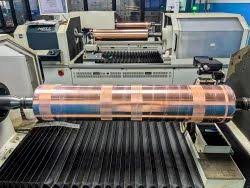
Gravure is a simple idea. Tiny cells are engraved into a copper-plated steel cylinder, filled with ink, and transferred to the substrate. The depth and shape of each cell controls how much ink lands on the film or paper.
So if the cells are off by even a few microns, the colour is off. No amount of press tuning fully fixes that.
Gravure shines on long runs: flexible packaging, laminates, labels, decorative paper, wrapping films. The cylinders cost more upfront than flexo plates, and you won’t love that line on the quote. But spread over hundreds of thousands of metres, the per-metre cost drops, and the cylinder can be reused or re-chromed for repeat jobs.
What to check when comparing rotogravure printing cylinder manufacturers
Price is the first thing people compare. It should be the last. Here’s what to look at first.
Engraving technology. Ask whether they use electromechanical engraving, laser engraving, or both. Electromechanical is the long-standing workhorse. Laser can hold very fine detail. Neither is “better” in every case, so the right answer depends on your artwork and substrate.
Base cylinder quality. A cylinder is only as straight as the steel under it. Ask about runout tolerance, balancing, and how the base is prepared before copper plating.
Copper and chrome plating. The copper layer takes the engraving. The chrome layer protects it from the doctor blade. A thin or uneven chrome coat wears fast, and you’ll see scumming or streaks well before you expect them.
Prepress and colour matching. Can they work from your artwork files directly? Do they supply a proof cylinder or a press-ready sign-off? One missed colour step here means a full remake later.
Re-chroming and repair. Worn cylinders aren’t dead. A good manufacturer will strip, re-plate and re-engrave, which saves you real money on repeat orders.
Turnaround, in actual days. Not “fast.” Ask for days, and ask what happens when your artwork changes mid-order.
Best gravure printing cylinders in India: what “best” really means
Search for the best gravure printing cylinders in India and you’ll get a pile of claims. Everyone’s best. So let’s define it in a way you can test.
A best-in-class cylinder gives you consistent cell geometry across the full face, a hard, even chrome finish, and tight dimensional accuracy so registration holds at speed. It also arrives on time. And when something goes wrong, someone picks up the phone.
Notice what’s missing? Fancy brochures. Machinery lists. You can ask for those, sure. But a sample cylinder or a reference from another converter tells you more in ten minutes than a catalogue does in an hour.
One honest caveat. The “best” cylinder for a 10-colour laminate line isn’t the same as the best one for a short-run decorative paper job. Be clear about your application before you ask for quotes.
How to pick a printing cylinder supplier in India
A printing cylinder supplier in India can be a full-service manufacturer, a trading outfit, or a workshop that outsources half the process. Those aren’t the same thing, and the difference shows up when you have a problem.
Here’s a short set of questions worth asking before you commit:
Do you plate, engrave and finish in-house, or outsource any step?
Can I visit the plant, or at least see a video walkthrough?
What’s your process when a cylinder fails inspection?
Can you share two or three client references in my segment?
What’s the realistic lead time for a repeat order versus a new one?
Outsourcing isn’t automatically bad. But if a step is outsourced, you want to know who owns the quality when it goes wrong.
And here’s a small, boring tip that saves headaches: ask for a written spec sheet for every cylinder, including circumference, face length, screen, and cell angle. Repeat orders go smoother when nobody’s guessing.
Where Primetech Gravures fits
Primetech Gravures manufactures gravure printing cylinders for packaging and printing converters in India.
What you can reasonably expect from a manufacturer in this space is a clear process, a proper pre-dispatch check, and a team that talks to your production people, not just your purchase desk. It’s fair to hold Primetech Gravures to that standard too. Ask for a sample, ask about lead times, and judge them the same way you’d judge anyone else on your shortlist.
Common mistakes buyers make
A few patterns come up again and again.
Buying on price alone is the big one. A cylinder that’s 10% cheaper but wears out early costs far more than the saving. Skipping the proof is another. So is sending low-resolution artwork and expecting miracles.
Then there’s the storage problem. Cylinders left uncovered between jobs pick up scratches, corrosion and fingerprints. Yes, fingerprints. A rack, proper sleeves and a handling rule cost almost nothing.
And finally, nobody tracks cylinder life. If you don’t log metres run per cylinder, you can’t plan re-chroming, and you’ll find out about wear from your customer’s complaint instead of your own data.
FAQs
Who are the best rotogravure printing cylinder manufacturers in India?
There’s no single answer, because “best” depends on your cylinder size, run length and print quality needs. Shortlist two or three manufacturers, ask each for a sample or reference, and compare plating quality, engraving accuracy and turnaround. Primetech Gravures is one name worth adding to that list.
How long does a gravure printing cylinder last?
It varies with chrome thickness, ink, doctor blade pressure and substrate. A well-plated cylinder can run very long jobs and then be re-chromed or re-engraved for reuse.
What’s the difference between electromechanical and laser engraving?
Electromechanical engraving uses a diamond stylus to cut cells into the copper. Laser engraving burns the cells using a laser beam and can suit very fine detail. Both are used in India, and the right choice depends on your artwork and quality target.
How do I choose a printing cylinder supplier in India?
Check whether the work is done in-house, ask for references in your segment, request a sample, and get lead times in writing. Then compare total cost per metre printed, not just the cylinder price.
You don’t need a perfect supplier. You need one who makes the same cylinder the same way, every time. So start small: send your next job’s specs to two manufacturers, ask for a sample and a written turnaround, and see who answers questions before the order, not just after. If you’d like a quote from Primetech Gravures, their website is primetechgravures.com.
Primetech Gravures
.