Chamber Vacuum Sealers Explained: Benefits, Features, and Industry Uses
Food businesses today operate in a market where freshness, safety, and presentation are judged in seconds. A single torn seal or a package that looks dull on a retail shelf can undermine months of work in sourcing, production, and branding. This is why more food manufacturers, meat processors, and commercial kitchens are re-examining how they package their products, and why vacuum packaging equipment has moved from a specialty tool to a core part of food processing equipment lineups.
Among the various options available, the Chamber Vacuum Sealer has become a preferred choice for operations that need consistency, speed, and reliability at scale. Unlike simpler sealing devices, it is built to handle liquids, irregular shapes, and high production volumes without sacrificing seal quality. As food safety regulations tighten and consumers pay closer attention to packaging integrity, understanding how this equipment works, and where it delivers the most value, has become essential knowledge for anyone involved in packaging automation and food preservation.
This article breaks down what a Chamber Vacuum Sealer is, how it compares to other vacuum sealing machine types, the industries that rely on it, and the features worth evaluating before making a purchase.
What Is a Chamber Vacuum Sealer?
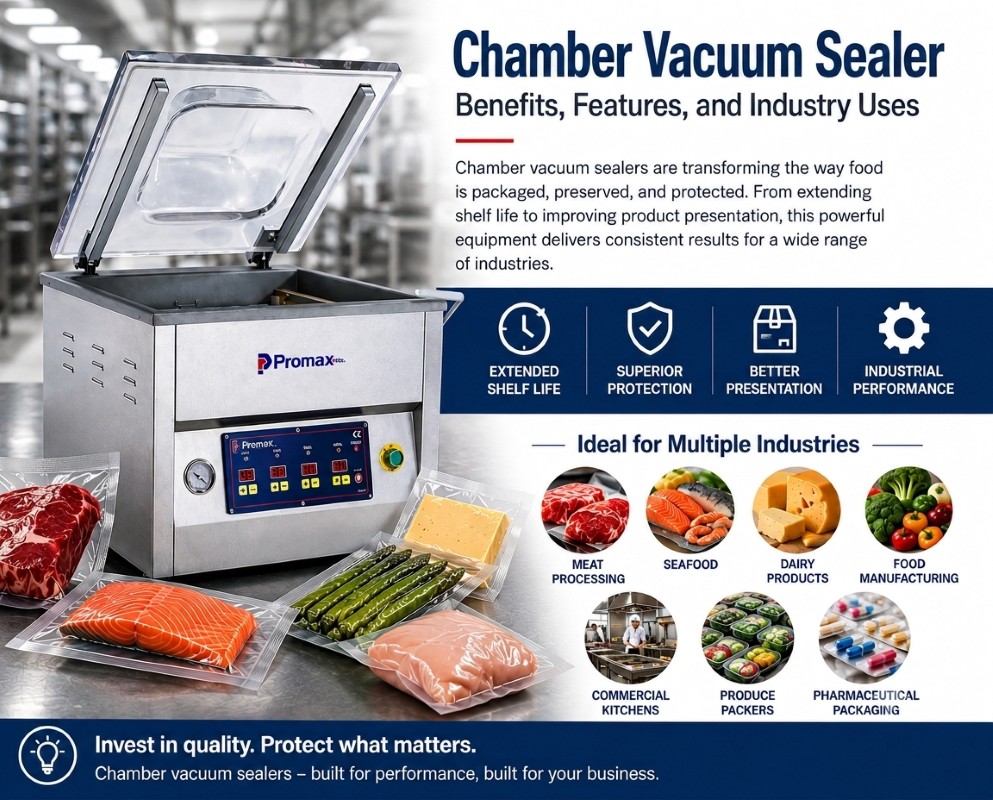
A Chamber Vacuum Sealer is a piece of vacuum packaging equipment that removes air from an entire sealed chamber rather than only from inside the bag. The product, placed in an open bag, is set inside the chamber. Once the lid closes, a vacuum pump extracts air from the whole chamber environment. Because pressure drops evenly on both the inside and outside of the bag, the bag itself does not need to be held open or clamped at a single point the way it does in simpler machines.
After the target vacuum level is reached, an internal heated bar seals the bag while it is still inside the chamber. The chamber then returns to normal atmospheric pressure, and the lid releases. This sequence allows the machine to seal liquids, marinades, soups, and wet products without the mess or seal failure that often occurs with other equipment.
Chamber Vacuum Sealer vs. External Suction Vacuum Sealers:
External suction machines, sometimes called nozzle or edge sealers, pull air directly out of the bag through a nozzle inserted at the open end. These machines are compact and affordable, which makes them common in small retail counters or light-duty kitchens. However, they struggle with liquid-heavy products, since suction can draw liquid into the pump and damage it over time.
A commercial vacuum packaging machine built on chamber technology avoids this issue entirely. Because the vacuum acts on the whole chamber rather than pulling air through the bag opening, liquids stay in place, seals form more consistently, and the equipment holds up better under continuous industrial use. This is one of the main reasons chamber-based systems dominate in meat processing, seafood, and other high-moisture applications.
Key Benefits of Chamber Vacuum Sealers”
Extended Shelf Life
Removing oxygen from a package slows the biochemical processes that cause spoilage. Aerobic bacteria and mold need oxygen to multiply, so a properly vacuum-sealed product can remain safe and fresh considerably longer than one stored in standard packaging.
Reduced Food Waste
Shorter shelf life leads directly to higher spoilage rates, which is a costly problem across the supply chain. By extending usable product life, vacuum packaging technology helps processors, distributors, and retailers reduce the volume of product that must be discarded before sale.
Better Product Presentation
A tightly sealed, air-free package tends to look cleaner and more professional on a shelf. For cheese, cured meats, and prepared foods in particular, the vacuum-formed shape can highlight the product itself rather than hiding it under excess packaging material.
Protection Against Freezer Burn
Freezer burn occurs when air inside a package interacts with the surface of frozen food, causing dehydration and texture changes. Because chamber sealing removes that air before freezing, products retain moisture and quality for much longer storage periods.
Improved Transportation
Vacuum-sealed packages are more compact and stackable than loosely wrapped alternatives. This reduces the space needed during shipping and storage, which can lower logistics costs and reduce the risk of damage during transit.
Reduced Oxidation:
Beyond spoilage, oxygen exposure causes oxidation that affects color, flavor, and nutritional value, particularly in fatty products like ground meat or oily fish. Limiting oxygen contact helps preserve the product closer to its original condition.
Enhanced Product Quality:
Taken together, these factors mean that food reaches the consumer in a state much closer to how it left the processing facility, supporting consistent quality and stronger brand trust.
Industries That Benefit From Chamber Vacuum Sealers:
Meat processing operations rely on chamber sealing to package fresh and cured cuts while controlling moisture loss and extending refrigerated shelf life.
Seafood producers use this equipment to lock in freshness immediately after processing, which is critical given how quickly fish and shellfish can degrade.
Poultry processors benefit from consistent seals on portioned cuts, whole birds, and marinated products, where liquid content would challenge external suction machines.
Cheese and dairy producers use vacuum sealing to prevent mold growth and preserve texture in aged and soft cheeses alike.
Produce packers apply the technology to extend the usable window for pre-cut vegetables, herbs, and other perishable items.
Commercial kitchens increasingly use chamber sealers for sous vide preparation, batch cooking, and portion control, where consistent sealing directly affects cooking results.
Food manufacturing facilities integrate chamber sealers into broader production lines as part of their food packaging solutions, often alongside labeling and case-packing equipment.
Pharmaceutical packaging also makes limited use of chamber sealing principles, particularly where moisture-sensitive products require an oxygen-reduced environment, though this falls outside typical food-grade applications.
Important Features to Consider:
Selecting the right industrial vacuum sealer involves more than comparing price tags. A few technical factors have an outsized impact on performance and total cost of ownership.
Chamber Size and Configuration:
Chamber dimensions determine what bag sizes and product volumes the machine can handle. Undersized chambers limit throughput, while oversized chambers waste energy on smaller batches. Matching chamber size to actual production needs is one of the most practical early decisions.
Vacuum Pump Quality:
The pump is the core working component of the machine. Higher-quality pumps reach target vacuum levels faster and maintain performance over more duty cycles, which matters significantly in high-volume operations.
Double Seal Bars:
Double seal bars create two parallel seals on each bag, adding a safety margin against leaks. This is particularly valuable for products headed into long-term frozen storage or extended distribution chains.
Stainless Steel Construction:
Food-contact surfaces should be built from stainless steel for durability, ease of sanitation, and compliance with food safety standards. This is a baseline expectation for any equipment operating in a regulated food processing environment.
Digital Controls:
Digital control panels allow operators to save and repeat precise vacuum and seal settings for different products, reducing variability between shifts and operators.
Gas Flushing and MAP Compatibility:
Some chamber sealers support modified atmosphere packaging (MAP), where a controlled gas mixture replaces the vacuum. This is useful for delicate products that would be crushed under a full vacuum, such as certain baked goods or soft produce.
Maintenance Requirements:
Pump oil changes, seal bar replacement, and gasket inspection are routine maintenance items. Facilities should factor ongoing maintenance demands into their equipment decision, not just the upfront purchase cost.
Energy Efficiency:
Newer pump designs and insulated chambers reduce power consumption per cycle, which adds up meaningfully for facilities running multiple shifts.
Future Trends in Vacuum Packaging Technology:
Packaging automation continues to reshape how food processing facilities operate. Chamber vacuum sealers are increasingly integrated into automated lines that handle loading, sealing, and discharge with minimal manual intervention, reducing labor dependency and improving consistency.
Smart controls are becoming more common, allowing facilities to store multiple sealing profiles and switch between products without manual recalibration. This supports faster changeovers in facilities that process a wide product mix.
Sustainability is another driving factor. Manufacturers are developing more energy-efficient systems and exploring compatibility with recyclable and bio-based film materials, responding to both regulatory pressure and consumer demand for reduced plastic use.
Industry 4.0 principles, including IoT monitoring, are beginning to appear in packaging equipment as well. Connected sensors can track pump performance, seal quality, and maintenance timing in real time, helping facilities move from scheduled maintenance to condition-based maintenance and reducing unplanned downtime.
Conclusion:
A Chamber Vacuum Sealer remains one of the most practical investments a food business can make, whether the goal is extending shelf life, reducing waste, or meeting the packaging expectations of modern retail and food service customers. Its ability to handle liquids, achieve consistent seals, and scale to industrial volumes sets it apart from simpler vacuum sealing machine designs.
Manufacturers such as Promarksvac Corporation supply commercial chamber vacuum sealing solutions designed for meat, seafood, dairy, and broader food processing applications, reflecting the continued demand for reliable equipment in this space. As automation, smart controls, and sustainable materials continue to advance, chamber vacuum sealing technology is likely to remain a central part of how the food packaging industry protects product quality from production floor to final delivery.
________________________________________
Author Bio
A packaging industry writer with a background in food processing equipment and SEO strategy, covering vacuum sealing technology, food preservation methods, and packaging automation trends for manufacturers and processors worldwide.
Promarksvac
.