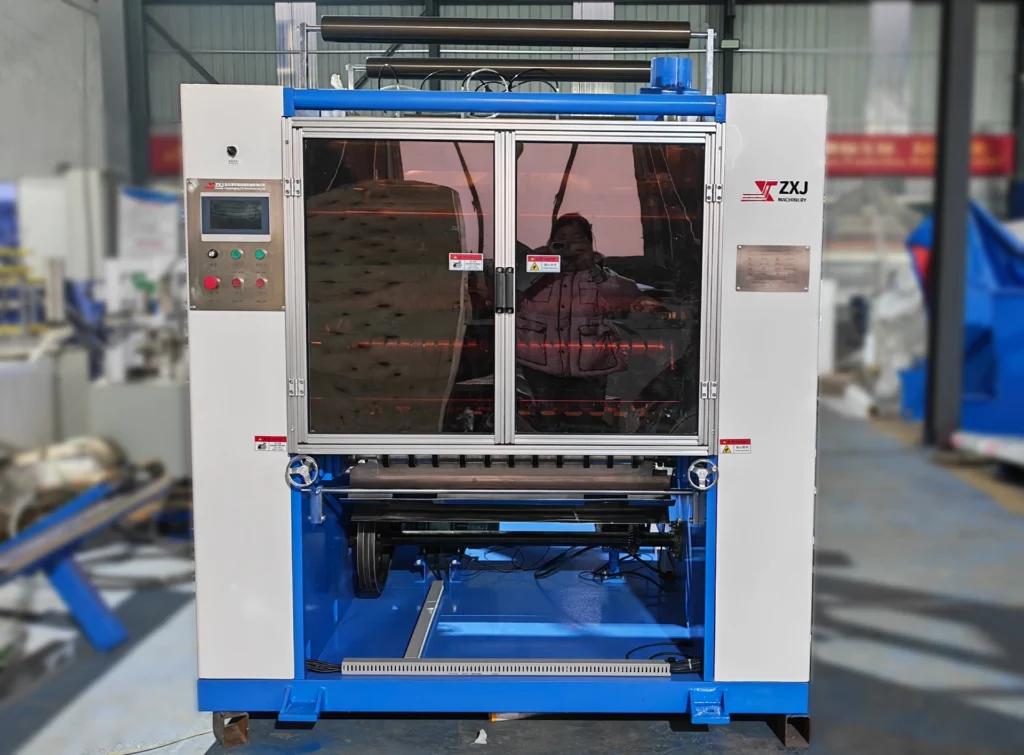
Pop-Up Aluminum Foil Folding Machines for Foodservice Sheet Production
Pre-cut aluminum foil sheets are widely used in restaurants, take-away kitchens, catering services, hair salons and household packaging. Compared with roll foil, pop-up sheets are easier to use, reduce waste and improve working speed at the point of service. For converters, however, stable production requires more than simply cutting foil into smaller pieces.
A pop-up aluminum foil folding machine converts jumbo foil rolls into interfolded or pre-cut sheet stacks that can be packed in cartons or dispensing boxes. The process usually includes unwinding, tension control, embossing or guiding when required, folding, cutting, counting and stack delivery. Each step affects whether the final pack dispenses smoothly.
Foil is thin, flexible and sensitive to tension. If the web is pulled too hard, it can stretch or tear. If tension is too low, the material may wrinkle, drift or create uneven sheet edges. For this reason, stable unwinding and accurate web guiding are important in continuous production. A line that only runs well during short testing may still create waste during long shifts if roll tension is not controlled.
The folding section is especially important for pop-up formats. Sheets need to overlap correctly so that one sheet pulls the next sheet forward without jamming or tearing. If the fold depth is inconsistent, the carton may look acceptable after packing but perform poorly during use. This is why converters should check dispensing behavior, not only sheet size and speed.
Cutting accuracy also affects the user experience. Foodservice buyers expect every sheet to be close to the declared size. Inaccurate cutting can make the stack uneven, increase foil waste and cause customer complaints. A reliable counting system is equally important because restaurants and distributors often buy by sheet count per box.
Packaging connection should be considered from the beginning. A neat foil stack must match the downstream carton loading or manual packing process. If the stack height changes too much, operators may need to correct it by hand, which reduces the benefit of automation. The machine should therefore be selected according to the final pack format, not only the foil width.
Factories that serve multiple markets often need fast changeover. Foodservice foil sheets, household sheets and salon foil sheets may require different lengths, widths, folding styles and counts. Touchscreen recipe storage, clear mechanical adjustment points and accessible cutting parts can help reduce downtime between orders.
Material quality is another factor. Foil thickness, roll flatness, surface condition and core quality all influence production stability. Before confirming a machine configuration, converters should test real production material whenever possible. A sample run can reveal whether the line needs special guiding, different fold settings or modified delivery handling.
Maintenance access matters in daily operation. Knives, rollers, belts, sensors and folding components should be easy to inspect and adjust. Small alignment problems in foil converting can quickly become visible in the finished carton, so operators need a machine layout that supports quick correction.
ZXJ Machinery shares more technical notes about aluminum foil folding, deli paper, non-woven products and disposable packaging machinery here: https://www.zxjmachinery.com/blog/
In summary, a pop-up aluminum foil folding machine should be evaluated by sheet accuracy, fold overlap, dispensing performance, stack quality and packaging connection. When these points are stable, the finished foil sheets become easier to pack, easier to sell and easier for end users to handle.
ZXJ Machinery
.