Bio-Based Polyamide Packaging Market to Reach $3.56 Billion by 2034
Market Summary
According to latest research by Growth Market Reports, the global Bio-Based Polyamide Packaging market size reached USD 1.28 billion in 2025, reflecting substantial and sustained growth as industries worldwide accelerate their transition toward sustainable packaging solutions. The market is expected to expand at a robust CAGR of 12.0% during the 2026-2034 forecast period, projecting a value of approximately USD 3.56 billion by 2034. This significant expansion is primarily driven by rising demand for eco-friendly materials, tightening regulatory frameworks that promote sustainable alternatives to fossil-based plastics, and deepening consumer preference for biodegradable and renewable packaging options.
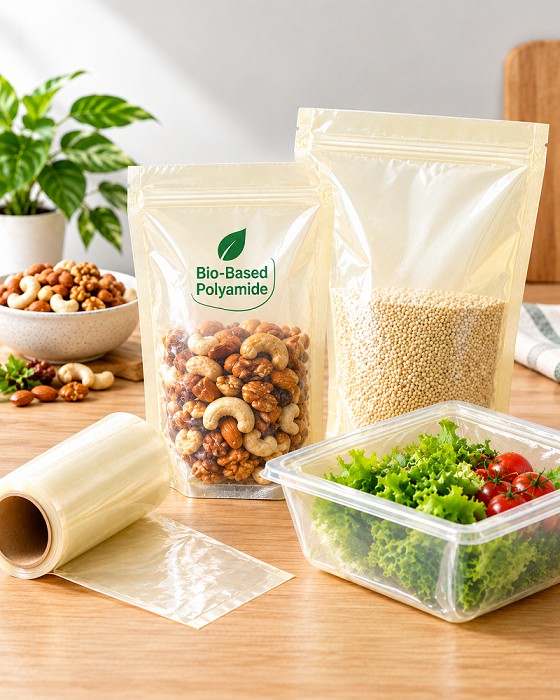
The Bio-Based Polyamide Packaging Market is gaining attention as packaging manufacturers explore materials that combine the functional performance of conventional polyamides with renewable feedstocks. Bio-based polyamides are produced using biomass-derived monomers, with the proportion of bio-based content varying according to the specific resin and production route.
Key Drivers
The growing emphasis on reducing dependence on fossil-based raw materials is a major driver for the Bio-Based Polyamide Packaging Market. Packaging producers are exploring renewable feedstocks to develop materials that can deliver the durability, strength, thermal stability, and barrier properties required for demanding applications. Sustainability-focused product development is encouraging greater consideration of bio-based polyamide materials.
Rising demand for high-performance flexible packaging is also supporting market development. Food, beverage, personal care, and specialty packaging applications increasingly require materials that provide protection against moisture, gases, and mechanical stress. Bio-based polyamides can address these functional requirements while offering a renewable-content pathway, creating interest among packaging manufacturers and material developers.
Technological progress in polymer synthesis and bio-based feedstock processing is another important growth factor. Improvements in monomer development, formulation, and processing technologies are helping manufacturers investigate new grades with application-specific properties. These advances can expand the suitability of bio-based polyamides across different packaging formats and performance requirements.
Key Challenges
Despite their potential, bio-based polyamides face several challenges. Production economics, feedstock availability, processing requirements, and certification considerations can influence adoption. Bio-based plastics overall continue to face cost pressures compared with conventional polymers, while environmental performance can vary according to feedstock, manufacturing processes, and end-of-life pathways.
Another important consideration is recycling. Bio-based origin does not automatically mean that a polymer is biodegradable or compatible with every recycling system. Consequently, packaging developers must consider material composition, multilayer structures, collection systems, and recycling compatibility when designing products.
Opportunities
The market presents opportunities through the development of recyclable packaging structures incorporating bio-based polyamide materials. As packaging stakeholders focus increasingly on circularity, manufacturers can explore designs that balance renewable content, product protection, material efficiency, and compatibility with established recycling systems. Greater attention to packaging design can support the integration of bio-based polyamides into next-generation structures.
Another opportunity lies in expanding bio-based polyamide applications beyond conventional flexible packaging. Advances in material formulation may enable their use in specialty food packaging, medical packaging, cosmetic packaging, and other applications requiring enhanced mechanical or barrier performance. Application-specific grades could allow producers to address requirements that differ across end-use sectors.
There is also scope for innovation in renewable feedstocks and supply chains. Developing diversified sources of bio-based raw materials could improve flexibility in production while supporting more consistent material availability. Collaboration among polymer producers, packaging converters, research organizations, and end users may further accelerate the development and qualification of bio-based polyamide packaging solutions.
Competitive Landscape
Arkema S.A.
BASF SE
Evonik Industries AG
DSM Engineering Materials (dsm-firmenich)
DuPont de Nemours, Inc.
UBE Corporation
Toray Industries, Inc.
Solvay S.A.
RadiciGroup
EMS-Chemie Holding AG
Future Outlook
The future of the Bio-Based Polyamide Packaging Market is closely connected to advances in renewable feedstocks, polymer chemistry, packaging design, and circular-material strategies. Continued research may improve material performance while expanding the range of packaging applications suitable for bio-based polyamides.
As sustainability requirements become more integrated into packaging development, bio-based polyamides are positioned as one potential pathway for combining renewable carbon sources with high-performance packaging functionality. Further progress in scalable production, material qualification, recycling, and lifecycle assessment will shape their adoption across food, medical, cosmetic, and specialty packaging applications.
Indira Fernandes
.